
10 LPN Travel Agencies: Compare Contracts and Benefits
The highest advertised weekly rate can leave an LPN with less money after housing and assignment expenses than a lower-paying offer. Reported LPN/LVN travel packages range from below $700 to above $2,100 per week, but differences in stipends, location, specialty, and assignment type make those figures poor substitutes for a contract-level comparison, as outlined in PracticalNursing.org's travel LPN compensation guidance.
For hospital executives and experienced candidates, agency selection is a clinical and financial decision, not a job-board popularity contest. The review should cover taxable base pay, shift differentials, overtime rules, housing, travel reimbursement, licensing costs, contract duration, facility fit, and credentialing support. Candidates also need cancellation terms and guaranteed-hours provisions before committing to housing or transportation.
LPN travel agencies should be compared as staffing partners with distinct capabilities and limitations. A strong long-term-care recruiter isn't automatically the best partner for a hospital vacancy, and a national platform doesn't guarantee an available LPN assignment in a preferred state.
Contract principle: The strongest offer combines acceptable net compensation, appropriate clinical responsibilities, dependable support, and written protection against foreseeable assignment disruptions.
The agencies below provide different starting points. Rates, openings, and benefit eligibility change, so the recommendation attached to each agency concerns its practical fit, not a promise about current inventory or compensation.
Table of Contents
1. Triage Staffing - Best for comparing shifts and assignment duration
4. Centra Healthcare Solutions - Separate benefits from reimbursement promises
5. Cross Country - Match recent experience to the requisition
7. Favorite Healthcare Staffing - Useful tools, different employment terms
9. Centers Health Care - Establish the assignment before comparing value
Build a Shortlist Around Fit, Not Headline Pay - Require written commercial and operational terms - Keep cardiac recruitment a separate workstream
1. Triage Staffing
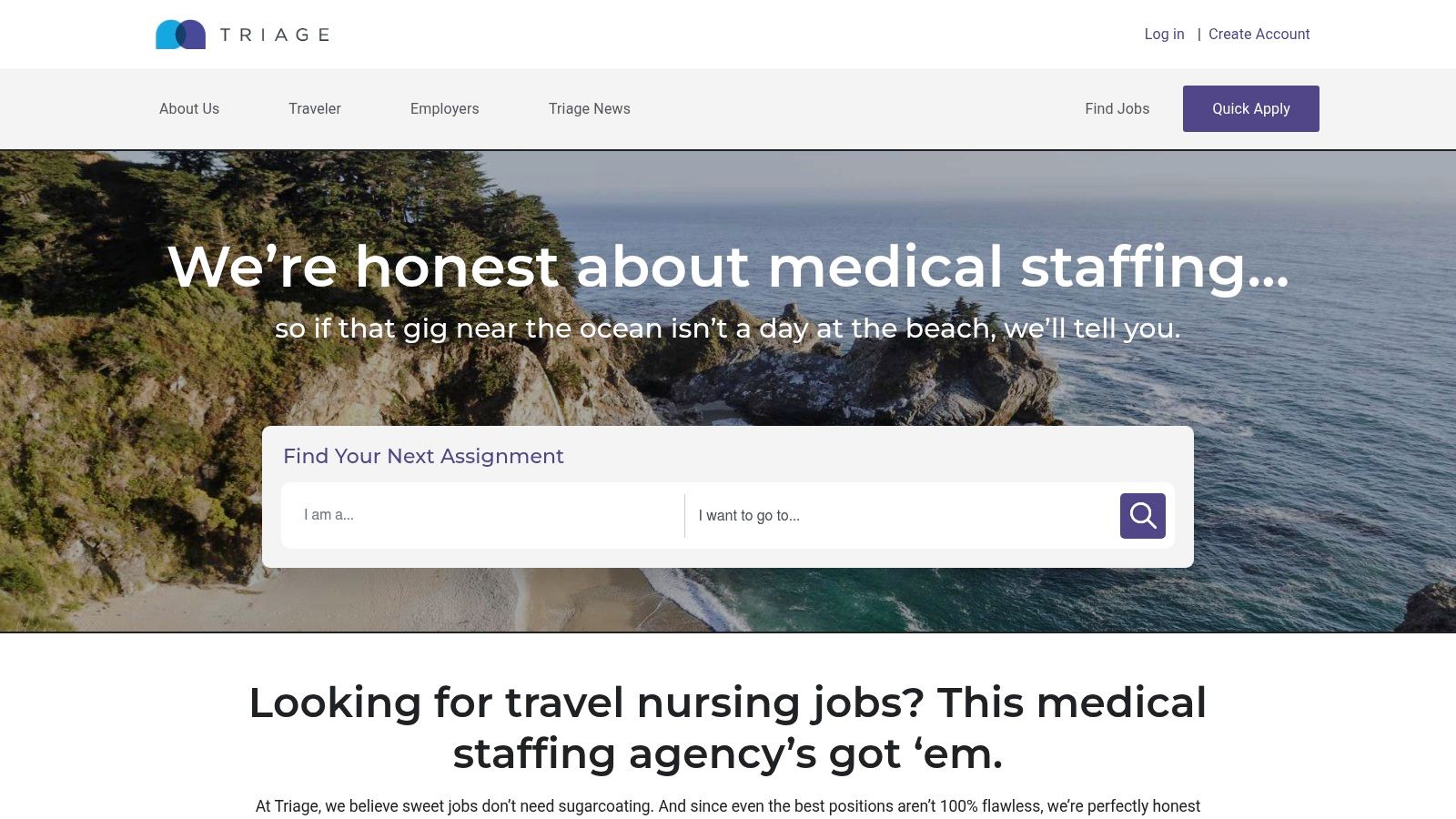
Pay transparency separates Triage Staffing from agencies that hide compensation behind a recruiter call. Triage Staffing's platform lists searchable LPN/LVN opportunities by state and specialty, including long-term care, and postings can show assignment length, shift details, and estimated gross weekly pay before a candidate commits to a conversation.
That visibility makes Triage a practical screening tool.
An estimated package still functions as a starting point only. Candidates should request the taxable hourly rate, stipend assumptions, overtime treatment, and any deductions in writing before comparing one posting against another.
Best for comparing shifts and assignment duration
Triage describes dedicated recruiter support and benefits covering health insurance, a retirement savings plan, and licensing reimbursement. Each benefit needs an eligibility date and written terms, especially when a candidate expects a gap between contracts.
Candidate advantage: Explicit LPN/LVN listings cut time spent filtering registered-nurse positions.
Operational advantage: Job-level schedule and duration data help facilities and candidates catch mismatches before submission.
Practical limitation: Openings and displayed rates change, and some details require registration or recruiter follow-up.
Candidates weighing a specific market, such as the assignments covered in our guide to Michigan travel nurse job requirements, should have the recruiter confirm the actual facility, license type, clinical duties, and start-date dependencies. Triage earns a place on the initial shortlist, provided the signed contract matches the advertised posting rather than its weekly headline.
2. CareerStaff
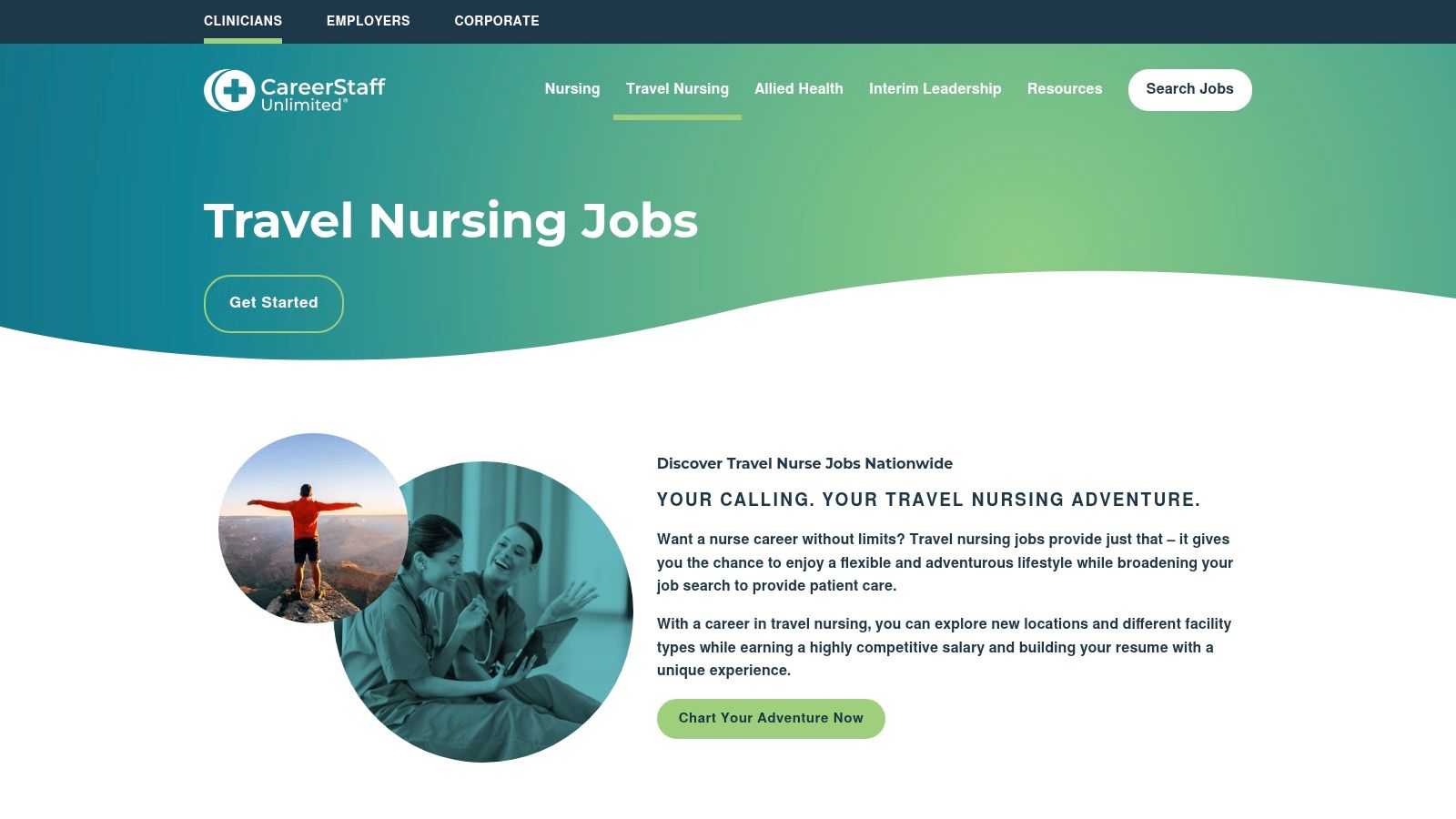
CareerStaff deserves priority for LPNs targeting skilled nursing and long-term care. CareerStaff's travel nursing service describes nationwide LPN/LVN recruitment across skilled nursing, long-term care, behavioral health, and hospital settings. A dedicated travel pathway makes LPN work easier to find than a general nursing search does.
The offer includes recruiter matching, housing and travel stipends, weekly direct deposit, and licensure guidance, including enhanced Nurse Licensure Compact support where applicable. Its site also carries a first-person travel LPN account. Treat that account as background, not as contract terms.
Evaluate the setting before the package
Hospital leaders comparing how healthcare staffing agencies screen clinical fit should ask CareerStaff for candidates whose recent experience matches the actual care environment. Behavioral health, skilled nursing, and inpatient work are different qualifications.
Set ownership early: who handles each licensing task, which expenses qualify for reimbursement, and what happens if clearance delays the start. Stipend eligibility needs a review, not an assumption.
Assignment-level variability is the limitation. Pay, benefits, and locations shift with facility demand. Shortlist CareerStaff for post-acute coverage, then require a setting-specific competency review and a full compensation breakdown before anyone signs.
3. Fusion Medical Staffing
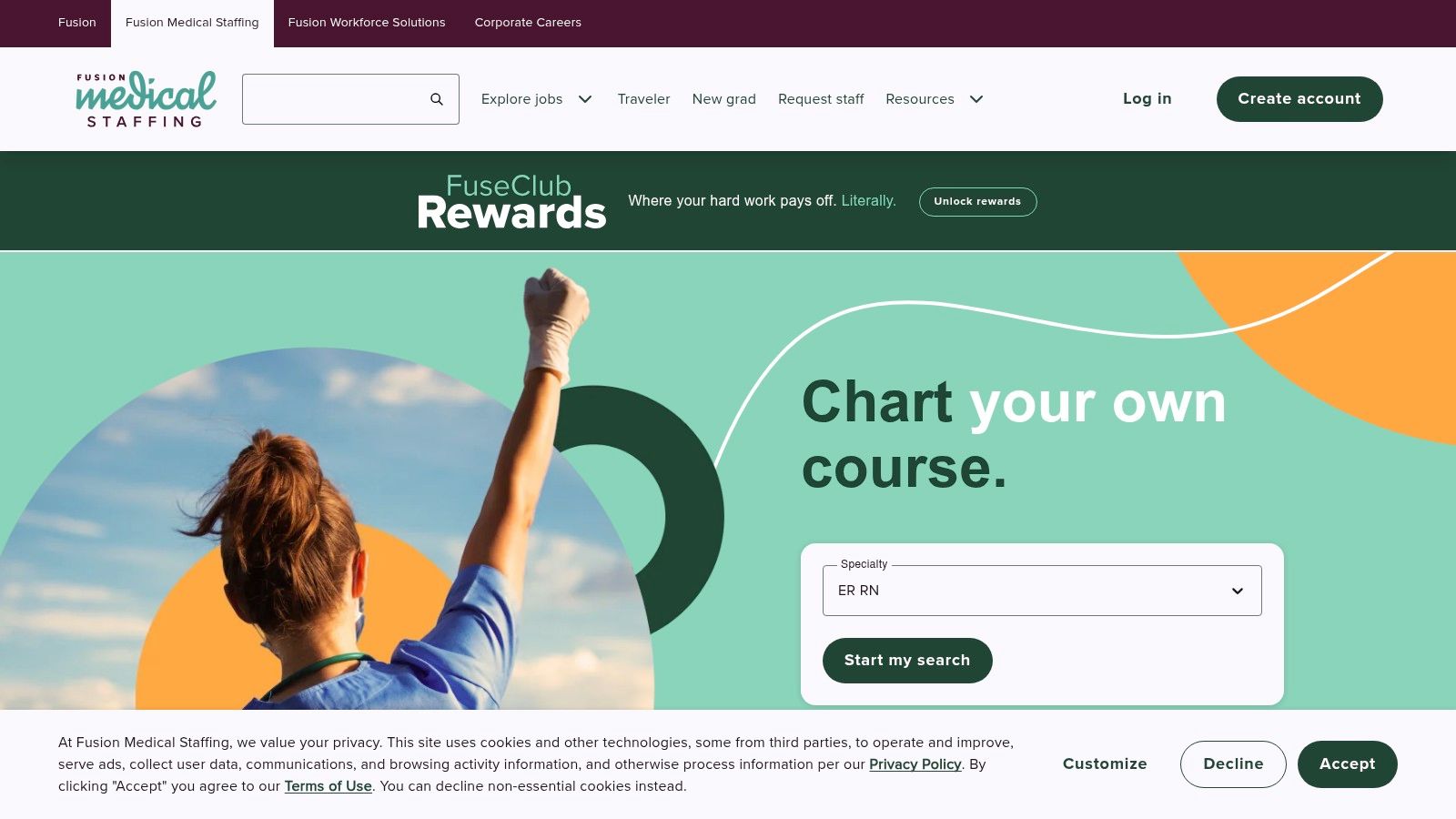
An LPN who hits a protocol conflict on day three needs more than a recruiter's phone number. That is the case for putting Fusion Medical Staffing high on a support-focused shortlist. Fusion Medical Staffing publishes dedicated travel-LPN information and describes assignments in long-term care, assisted living, memory care, and home health.
Its traveler resources include a dedicated recruiter, licensing assistance, a clinical liaison, a mobile app, and round-the-clock support. The platform also supports traveler profiles and job or credential management.
Best fit: Experienced LPNs who want support beyond offer negotiation, particularly when entering an unfamiliar facility.
Useful distinction: Clinical-liaison access is a separate service to evaluate from routine recruiter communication.
Main limitation: A nationwide search platform does not confirm current LPN openings in a specific location.
Advertised support means little until it is tested. Before signing, ask Fusion to name the clinical liaison assigned to your contract, describe the escalation route for orientation problems, and state what help is available outside normal business hours. Candidates should also ask how Fusion handles assignment concerns involving unfamiliar protocols or responsibilities that differ from the accepted role. Facilities should request confirmation that the submitted clinician's recent competencies match the unit's expectations.
Fusion is a sound support-focused option. Current openings, contract duration, pay, and response procedures still require assignment-specific confirmation before onboarding begins.
4. Centra Healthcare Solutions
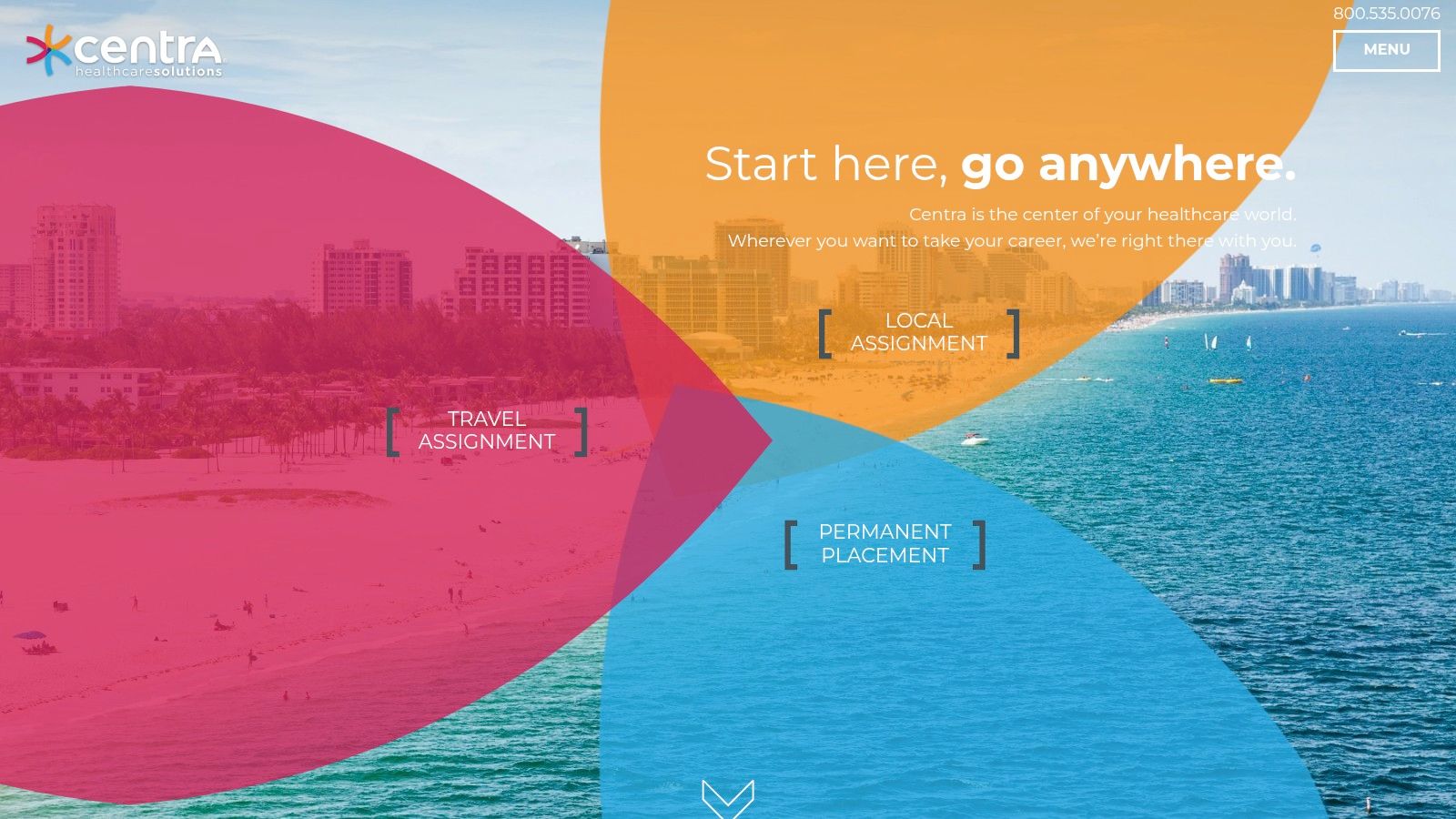
Travel contracts are not the only arrangement worth pricing. Centra Healthcare Solutions lists LPN/LVN travel disciplines and also staffs local and permanent positions, giving candidates a real comparison point inside a single agency relationship.
That mix has practical value. An LPN can test a region on contract before committing to a permanent move, or stay with one agency during a gap between assignments. On the employer side, a vacancy can be scoped as travel coverage, a local contract, or a permanent search, and an agency that earns fees on all three has less reason to push the most expensive option.
Separate benefits from reimbursement promises
Centra advertises housing accommodations, licensing and medical reimbursement, continuing-education reimbursement, and a dedicated representative. Housing terms and reimbursement programs carry real cash-flow consequences, so treat each as a written term rather than a category label. Candidates should get eligible expenses, required receipts, payment timing, and any repayment obligation on early cancellation in writing. Facilities should confirm who resolves missing medical documentation and whether the proposed start date assumes unfinished credentialing work.
The limitation is inventory visibility. A published discipline list says nothing about active LPN openings today, and advertised benefit categories say nothing about dollar amounts.
Keep Centra on the shortlist for employment flexibility and defined benefit categories. Then compare the actual travel offer against any local or permanent alternative on net pay, duration, and eligibility. Travel status is not automatically the better deal.
5. Cross Country
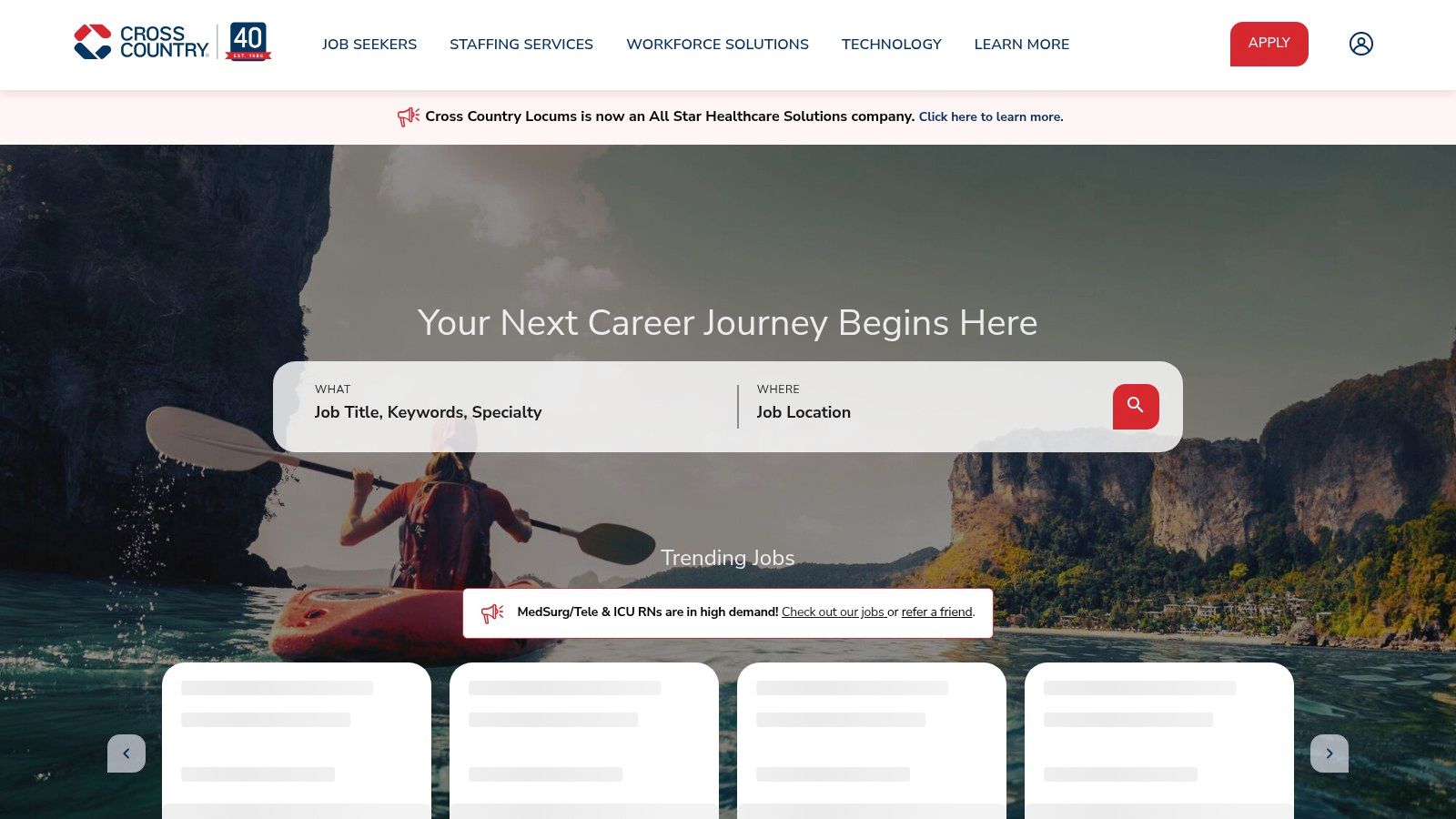
Cross Country earns its shortlist spot on posting detail. Cross Country has published LPN travel assignments, including long-term-care and rehabilitation positions, with some postings showing weekly gross pay, schedules, contract length, and experience requirements. That specificity lets a candidate screen a requisition before ever contacting a recruiter, which saves time on both sides.
Job pages may also describe housing or an allowance, insurance, travel reimbursement, and continuing-education credits. Those categories matter only at the offer stage, where dollar amounts and eligibility rules decide whether the package beats a competing requisition.
Match recent experience to the requisition
Screen the clinical requirement: Recent specialty experience should match the actual assignment rather than the candidate's license designation.
Check contract status: A visible listing may have expired or been filled before the candidate contacts the recruiter.
Separate applicable services: Cross Country's broader staffing capabilities should not be assumed to apply to every LPN traveler.
For hospital leaders, the decisive question is whether the agency submits a clinician matched to the unit's patient population, supervision model, and orientation plan. For candidates, it is whether the advertised schedule and clinical expectations survive unchanged into the final agreement.
Keep Cross Country on the shortlist when its live requisitions carry enough detail to screen efficiently. Its broader service portfolio says nothing about current LPN availability.
6. Aya Healthcare
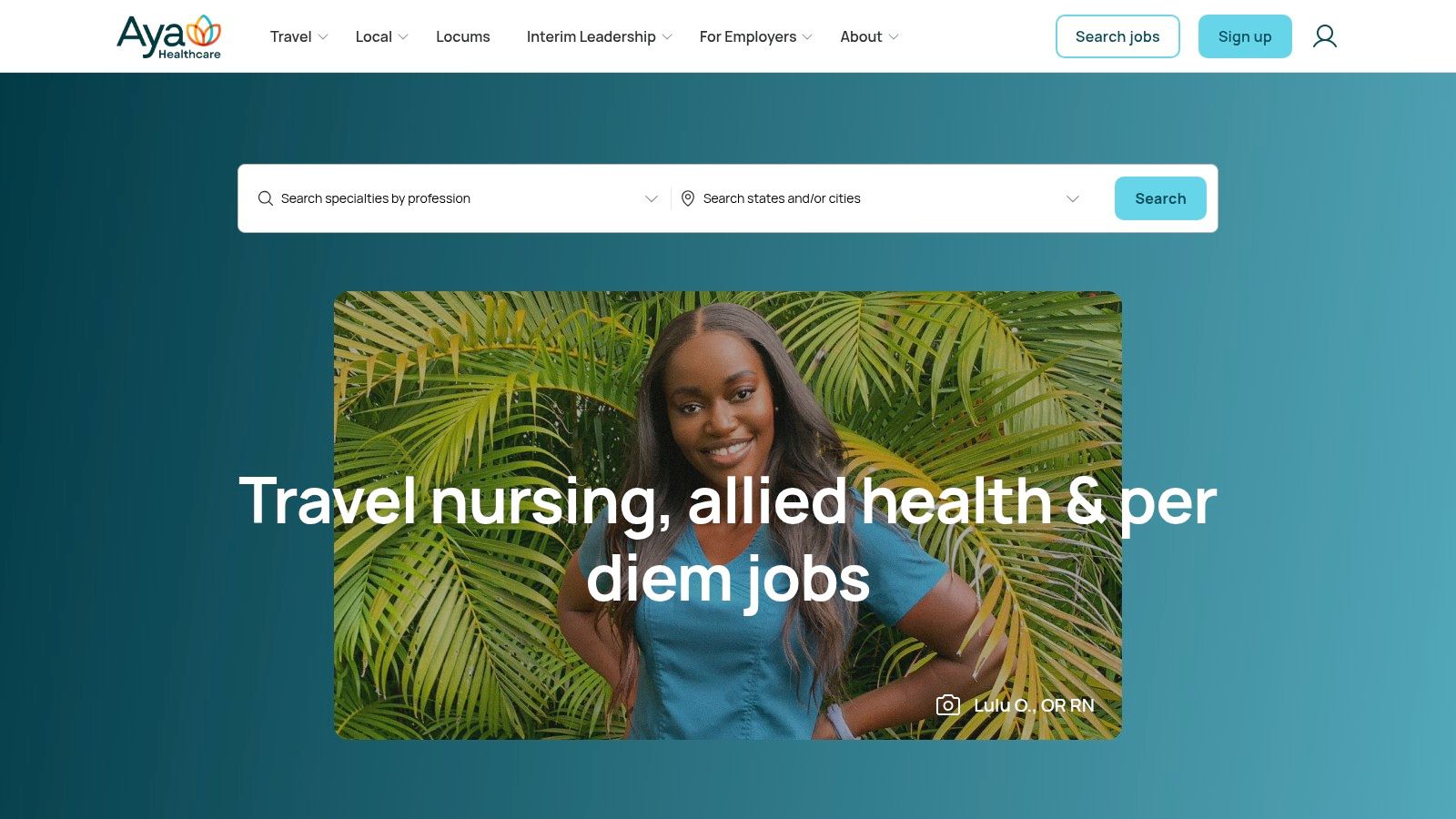
Scale helps only when the inventory matches the license. Aya Healthcare runs a dedicated travel LVN/LPN search pathway, posts job and facility details, and staffs nationally, which makes it one of the stronger agencies for comparing the same license across regions.
Aya describes recruiter, licensing, and compliance assistance plus round-the-clock assignment support. Benefits may include insurance, housing or a stipend, and a retirement savings plan, subject to eligibility and assignment terms.
Platform breadth says nothing about relevant LPN inventory. Candidates should filter by license, state, setting, and schedule before comparing packages. Hospital leaders should treat Aya's wider nursing marketplace as a sourcing pool, not proof of an LPN-ready bench.
Run the housing math before signing
Any offer comparison should include a review of housing for nurses. Establish who signs the lease, which utilities and deposits stay with the traveler, and what happens to housing costs after a facility cancellation. A $200 weekly stipend increase, for example, is not a gain if an agency-controlled lease leaves the traveler responsible for a $1,500 early-termination fee after that cancellation.
Hospital leaders should ask Aya to name the credentialing owner and list which unresolved items could delay a scheduled start. Candidates should confirm insurance effective dates, benefit continuity between assignments, and reimbursement conditions in writing.
Shortlist Aya for geographic comparison and assignment support. Decide on a verified LPN requisition and a written pay breakdown, and ignore the size of the broader marketplace.
7. Favorite Healthcare Staffing
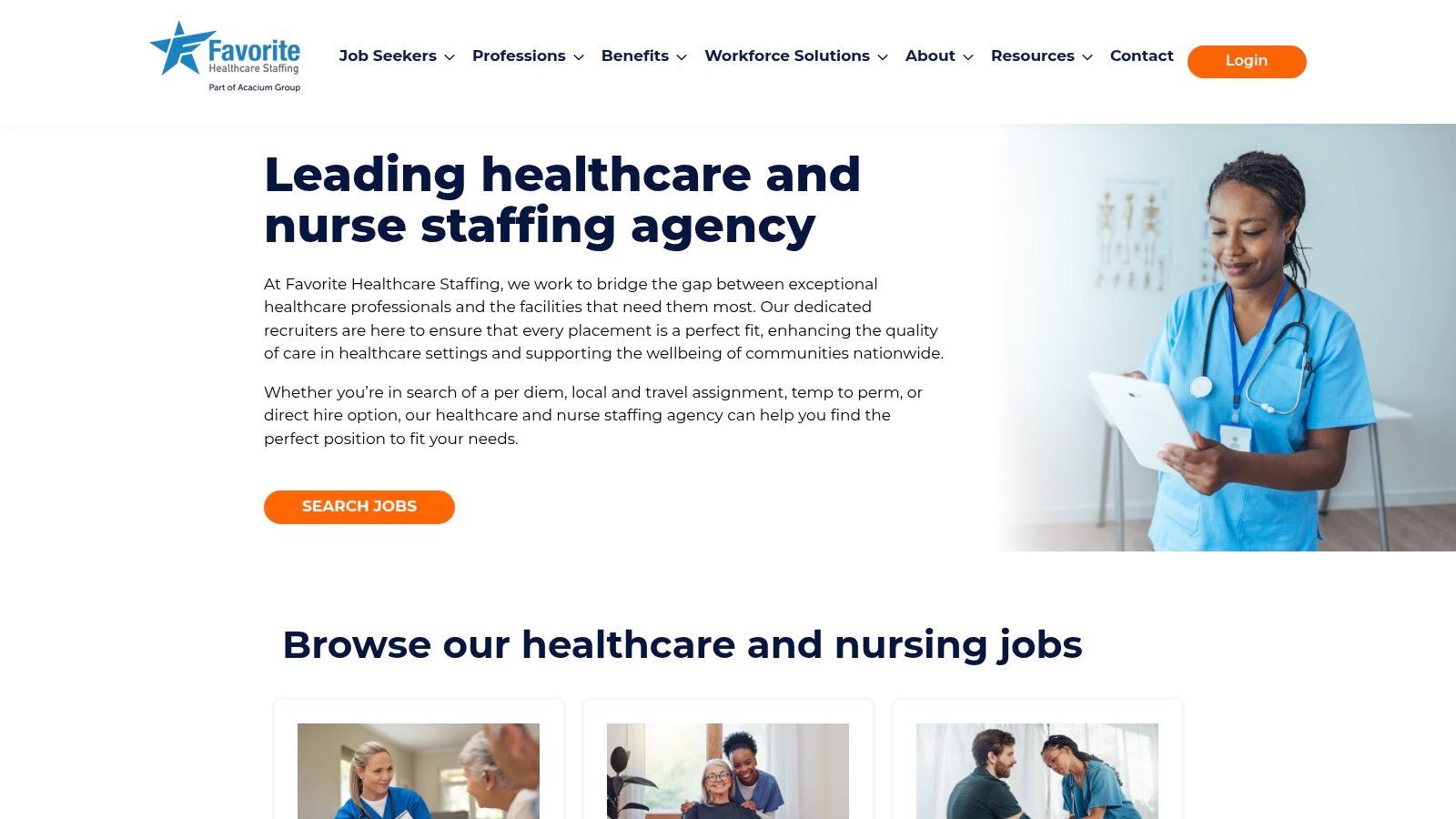
Continuity between contracts can outweigh one attractive assignment. Favorite Healthcare Staffing is a practical choice for LPNs weighing travel work against local contracts, per diem shifts, and permanent roles. The agency includes LPNs/LVNs in its nursing workforce and describes nationwide opportunities across settings such as long-term care and rehabilitation.
Travel assignments typically run around 13 weeks, according to Favorite Healthcare Staffing's travel assignment overview, though duration varies by facility. Confirm the exact start and end dates, the extension process, and the employment classification before assuming an advertised position is a true travel contract.
Useful tools, different employment terms
Favorite describes benefits and an app that handles credential uploads and timecards. Those tools matter for administrative follow-through, but a smooth upload workflow does not confirm that a file is complete or that a facility has approved the clinician.
Primary advantage: Multiple employment types provide alternatives when preferred travel openings are unavailable.
Administrative benefit: App-based document and timecard tasks create a defined workflow to test during onboarding.
Main caution: Benefit eligibility can differ by job type, and a general travel page does not prove regional LPN inventory.
Ask the recruiter to separate travel reimbursement, local-contract compensation, and per diem pay in writing. Facilities should confirm the proposed staffing model before comparing pricing.
Evaluate Favorite on flexibility across employment types, and price each arrangement separately.
8. Healthforce
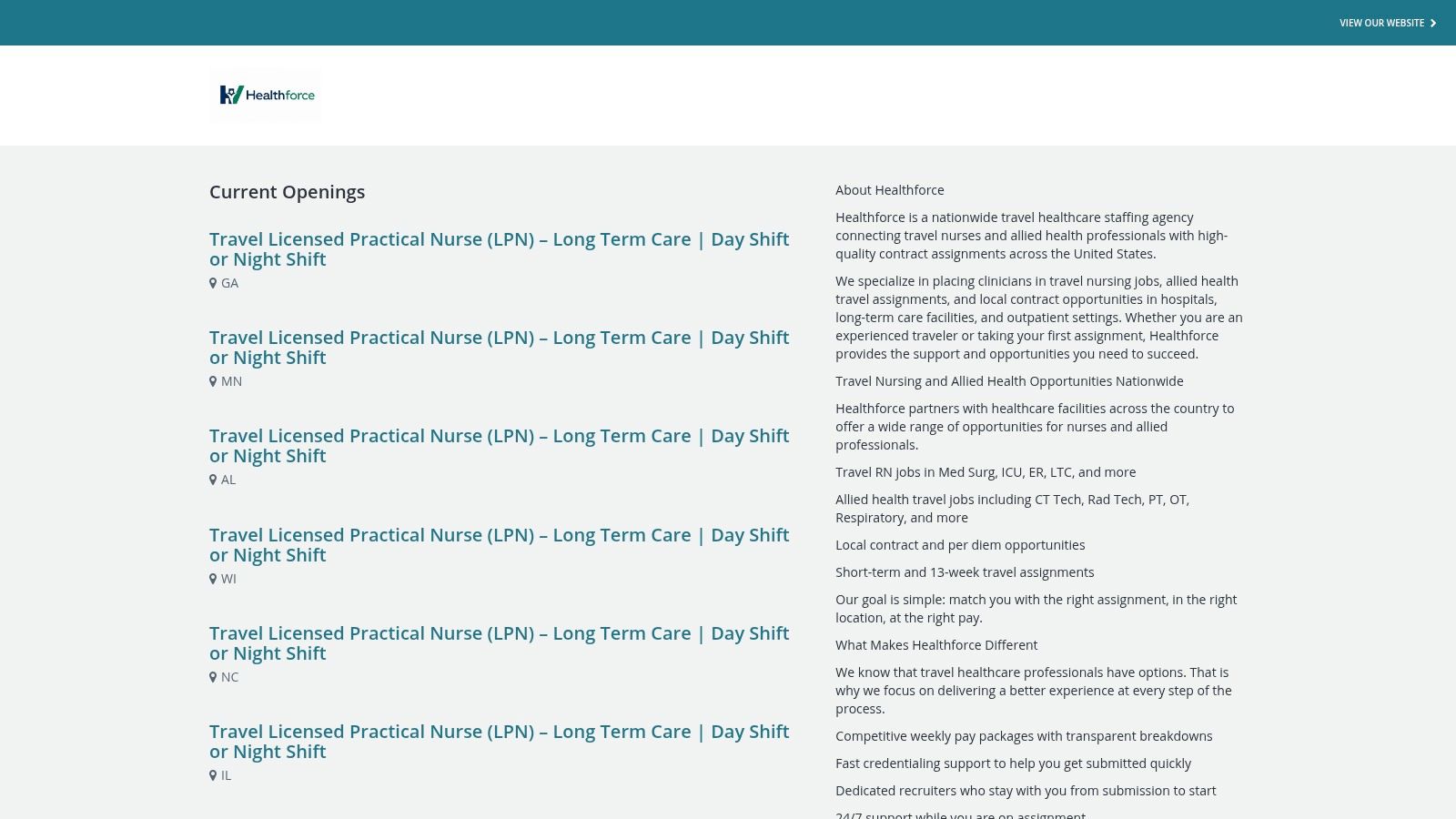
Healthforce is a focused option for experienced long-term-care LPNs. The Healthforce job board advertises travel LPN roles directly, including long-term-care openings across multiple states. Postings describe weekly pay packages, credentialing assistance, recruiter support, and round-the-clock assignment assistance.
Direct LPN listings give candidates a clearer starting point than a generic nursing recruitment page. The trade-off is thinner public background than larger agency career sites publish, so most of the due diligence has to happen in recruiter conversations.
Require details before onboarding
Get the employing entity, facility name, taxable hourly rate, stipend breakdown, housing policy, and assignment dates in writing before investing heavily in onboarding. A short job advertisement is a starting point. Terms only count once they appear in the contract.
Facilities should test how Healthforce verifies licenses, competencies, medical documentation, and expiration dates. Credentialing assistance should mean an accountable process with a named owner. A request to upload documents is not verification on its own.
Healthforce works best for targeted long-term-care placement in a defined destination. Openings rotate, and the recruiter must confirm that a specific requisition is still active before either side commits.
Treat Healthforce as a specialty recruiter worth a call when a live posting matches recent experience and preferred geography. The right next step is a written assignment summary, then a full contract review covering the housing, benefits, and cancellation terms the public listing leaves open.
9. Centers Health Care
Centers Health Care earns a look only when its territory matches yours. It suits LPNs with long-term-care experience who are open to assignments across its listed Northeast and Midwest regions.
The Centers Health Care traveling-nurse application accepts candidates holding active CNA, LPN, or RN licenses and screens for long-term-care experience plus willingness to take short- or long-term assignments. Applicants commit to defined travel regions, and placements stay inside one operator's facility network.
Clear advantage: a direct LPN application path with an explicit long-term-care focus.
Geographic limitation: listed regions are narrower than what national agencies describe.
Commercial limitation: the application page publishes no pay scale or benefits detail.
Establish the assignment before comparing value
Ask for the specific facility, assignment length, shift expectations, housing arrangements, and floating policy before onboarding. Stated willingness to travel leaves the facility question open, and an accepted application means little until a named site and dates are attached to it.
Employers evaluating this channel should weigh continuity inside one regional network. Check how recent experience gets verified, what orientation involves, and who owns escalation when coverage gaps appear.
Centers Health Care belongs on a shortlist when its live regions and long-term-care census align with what you need. If the assignment you want falls outside that footprint, move on to a national option.
10. Medical Solutions
Use Medical Solutions as a secondary sourcing channel, not the first file you open. It runs a national healthcare staffing operation across travel nursing, allied staffing, job-search tools, and traveler resources. The public pitch centers on travel nursing broadly, so an LPN has to prove the fit before treating the brand as a pipeline.
That proof starts with a live requisition. Ask for the state, facility type, unit or care setting, schedule, contract dates, and a full compensation breakdown before credentialing begins. A hospital leader should ask whether the available clinician pool is credentialed for LPN scope in that facility, because broad nursing coverage can hide a thin LPN bench.
Hold it to the same contract test
The advantage is reach. Medical Solutions can widen the search when LPN-first agencies do not produce the right geography or setting, and its scale may surface facility relationships a smaller firm cannot.
The constraint is opacity. Its public materials do not establish a standard LPN pay range or steady LPN inventory, so completing onboarding on brand strength alone is a weak trade.
Bring it into the final round only after a recruiter names a relevant opening. Then judge it like every other staffing partner: who owns credentialing, when benefits start, what happens if the facility cancels, and how extensions are priced.
Top 10 LPN Travel Agencies: Side-by-Side Comparison
Agency | LPN/LVN Travel Focus | Coverage and Settings | Support and Benefits | Distinguishing Consideration |
|---|---|---|---|---|
Dedicated LPN/LVN listings | Search by state and specialty, including long-term care | Recruiter support; health coverage, 401(k), and licensing reimbursement described | Some listings show shift, contract length, and estimated weekly pay | |
Dedicated travel LPN/LVN pathway | Nationwide; skilled nursing, long-term care, behavioral health, and hospitals | Recruiter support; housing and travel stipends, weekly direct deposit, and licensure guidance described | Offers a range of care settings and licensure support | |
Dedicated LPN/LVN travel information | Nationwide; long-term care, assisted living, memory care, and home health | Recruiter, licensing, clinical liaison, app, and 24/7 support described | Extensive traveler support resources | |
LPN/LVN travel roles listed | Nationwide; travel, local, and permanent options | Dedicated representative; housing, licensing, medical, and continuing-education reimbursement described | Multiple employment types may offer alternatives to travel | |
Published LPN travel assignments | Long-term care, rehabilitation, and other settings | Some listings describe housing, insurance, travel reimbursement, and CE credits | Some postings include pay, schedule, and contract length | |
Dedicated travel LVN/LPN search page | National job and facility search | Recruiter, licensing, compliance, and 24/7 assignment support described | Online tools help compare jobs and facilities | |
Travel opportunities include LPN/LVN roles | Nationwide; long-term care, rehabilitation, and other settings | Benefits and an app for credentials and timecards described | Also offers local contract, per diem, and permanent work | |
Job board explicitly lists travel LPN openings | Multiple states, with a focus on long-term care | Credentialing assistance and 24/7 support advertised | Direct LPN postings can help verify current opportunities | |
LPNs with active licenses may apply | Regional travel assignments; long-term care focus | Application asks about experience and assignment preferences | More regionally focused; public pay and benefit details are limited | |
LPN-specific pathway is less prominent | National travel staffing operation | Traveler support resources described | Confirm current LPN/LVN contracts directly |
Build a Shortlist Around Fit, Not Headline Pay
The strongest LPN travel agencies are the ones that can document a suitable assignment and support it through completion. Candidates and employers should first narrow the field by geographic coverage, active LPN-specific openings, clinical setting, and contract flexibility. A national brand without a relevant opening is less useful than a focused partner with the right requisition and qualified candidates.
Clinical setting deserves particular weight. Nursing and residential-care facilities employed 246,350 LPNs/LVNs in 2025, compared with 105,790 in hospitals, according to the Bureau of Labor Statistics' LPN/LVN occupational profile. Hospital leaders shouldn't assume that an agency's strength in long-term care establishes equivalent hospital-placement capability.
Require written commercial and operational terms
Compensation: Confirm taxable base pay, differentials, overtime calculations, guaranteed hours, and treatment of reduced shifts.
Assignment expenses: Separate housing, travel reimbursement, licensing costs, benefit deductions, and any agency fees or repayment obligations.
Credentialing: Name the party responsible for license verification, background checks, immunizations, competencies, expiration tracking, and final facility clearance.
Contract protection: Specify cancellation notice, financial responsibility, extension conditions, schedule changes, and the process for resolving assignment concerns.
Credentialing performance should be measured, not described only as support. Hospitals should request credential-ready status, time from accepted offer to cleared start, document defects, and assignments delayed by unresolved compliance requirements. Candidates should receive a clear list of outstanding items before making nonrefundable arrangements.
Placement quality also requires follow-through. The Joint Commission's HCSS-5 measure tracks the percentage of travel clinical placements without a customer-issued Do Not Return designation and is reported monthly, providing a concrete framework for reviewing fit and outcomes in its Health Care Staffing Services measure specification.
Keep cardiac recruitment a separate workstream
Hospitals evaluating specialized cardiac staffing need a dedicated resource beyond an LPN agency comparison. Requirements for general cardiology, interventional cardiology, electrophysiology, heart failure, cardiothoracic surgery, and advanced practice coverage should be defined by the relevant clinical leadership.
Physician recruitment and LPN travel staffing aren't interchangeable services. Each requires its own role definition, qualification review, coverage model, and commercial evaluation. Hospital leaders should maintain separate shortlists while coordinating both efforts around continuity of care and the program's actual staffing needs.
American Cardiology Group offers specialized nationwide recruitment for cardiology and cardiac surgery, including permanent physicians, locum tenens coverage, advanced practice providers, and executive leaders. Hospitals addressing LPN coverage alongside cardiac-program vacancies can visit American Cardiology Group to discuss a separate, specialty-focused recruitment strategy aligned with clinical requirements and long-term program goals.
Comments