
Rural Physician Shortage in Cardiology: Causes and Fixes
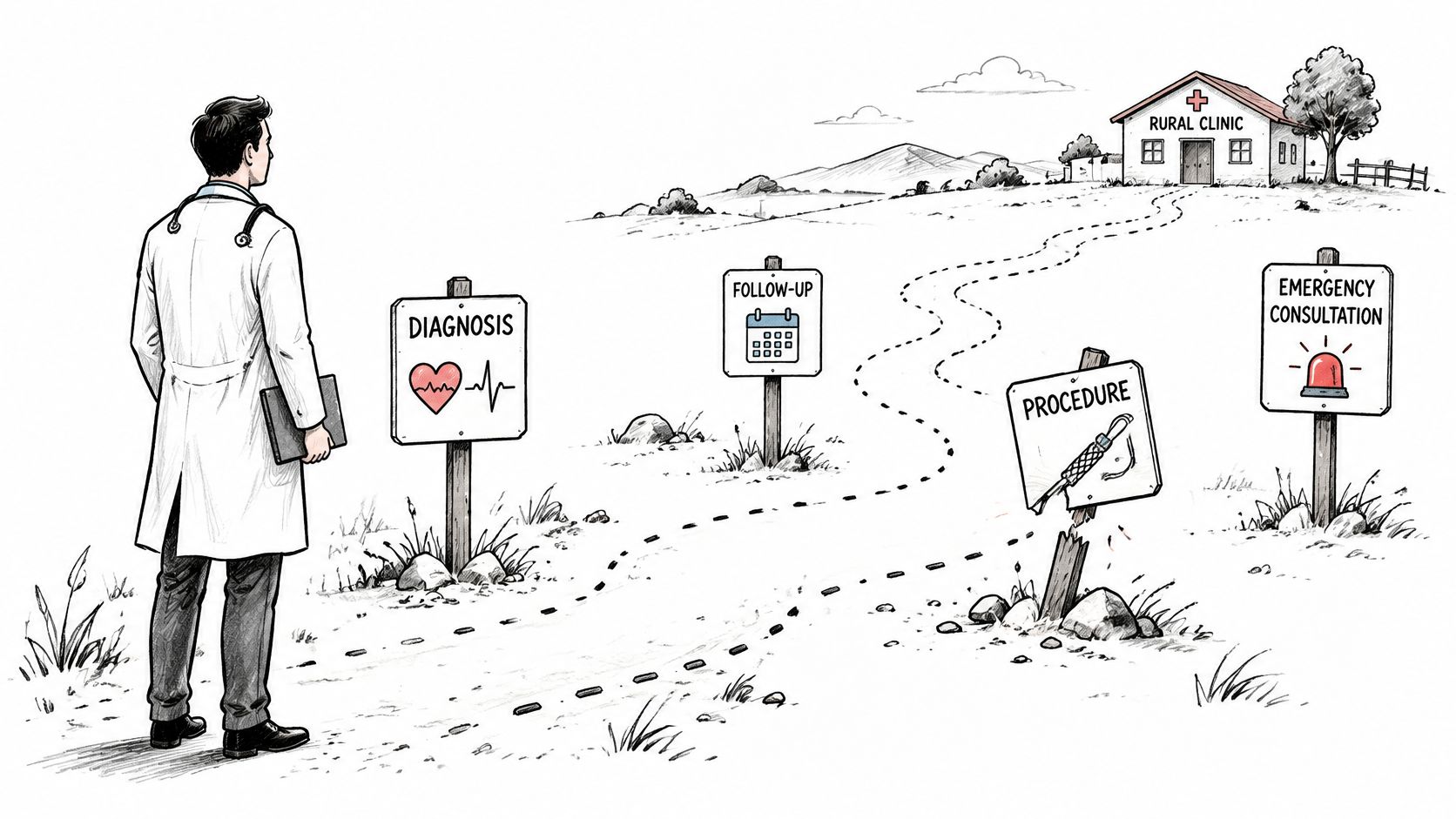
In 2022, rural U.S. communities had only 2.6 cardiologists per 100,000 residents, compared with 7.3 per 100,000 in urban areas, and rural supply per capita fell 5.8% from 2012 to 2022, according to the rural specialist access analysis. That trend reframes the rural physician shortage for cardiac programs. The constraint isn't headcount alone, it's whether a hospital can deliver diagnosis, follow-up, procedures, and emergency consultation reliably. A nominal ratio can hide uncovered nights, long transfer routes, and procedural volume too thin to sustain interventional cardiology or electrophysiology locally. Judgement follows from that distinction, coverage models should be scored on transfer times, call burden, and procedural volume, not vacancy duration alone.
Table of Contents
Rural Cardiology Shortage Numbers at a Glance - Urban versus Rural Physician Supply Indicators
Why Rural Cardiology Positions Stay Empty - Drivers of the Rural Cardiology Gap and Their Program Effects
What Shortage Does to Cardiac Patient Outcomes - Time Becomes the First Clinical Variable - Continuity Slips Between Visits - Leakage Weakens the Service That Remains
Policy Levers That Shape Rural Recruitment - Scale Still Favors Early Action
Matching Coverage Models to Clinical Need - Rural Cardiology Coverage Pathways by Speed, Cost and Limit - Apply the Table to a Concrete Constraint
Rural Cardiology Shortage Numbers at a Glance
Cardiology supply varies sharply by geography. In 2022, rural areas had 2.6 cardiologists per 100,000 residents, compared with 7.3 per 100,000 in urban areas. The ratio sets context, but it does not show whether a hospital can provide dependable coverage across clinic, inpatient consultation, and urgent calls.
Urban versus Rural Physician Supply Indicators
Metric | Urban | Rural | Year |
|---|---|---|---|
Cardiologists per 100,000 residents | 7.3 | 2.6 | 2022 |
Primary-care physicians per 1,000 residents | 3.25 | 2.54 | 2017 |
Areas with a primary-care physician shortage | No urban comparison reported | 65% | 2023 |
Change in cardiologists per capita | 7.3 per 100,000 in 2022 | -5.8% | 2012 to 2022 |
Rural primary-care supply grew, but more slowly than urban supply. In the 2020 JAMA Network Open county analysis, rural counties rose from 2.22 to 2.54 primary-care physicians per 1,000 residents from 2009 through 2017, a 14.3% gain. Urban counties rose from 2.69 to 3.25 per 1,000, a 20.8% gain, across 1,976 rural and 1,167 urban counties.
In 2023, 65% of rural U.S. areas had a shortage of primary-care physicians, according to HRSA figures reported by STAT. This broader workforce context matters for cardiology because primary care helps sustain the referral base. It does not, however, establish whether a cardiologist is available for an urgent consult or whether local procedural volume supports on-site services.
Planning rule: Use population ratios to assess supply, then test actual coverage against transfer times, call burden, and procedural volume.
State-level supply also varies. The state ranking of cardiologists per capita can inform search-market comparisons. Judgement: A favorable countywide physician ratio does not guarantee reliable cardiac access; executives should assess whether the coverage model can meet clinical needs around the clock.
Why Rural Cardiology Positions Stay Empty
The causal chain is self-reinforcing. Lower population density produces fewer cases and narrower professional breadth. Fewer cases weaken training exposure, subspecialty peer support, and perceived career progression. Those limits make offers harder to close, and each failed search further reduces local volume as cases move elsewhere.
The OECD Health at a Glance 2025 analysis found metropolitan areas averaged 5.0 doctors per 1,000 residents in 2023 across 18 OECD countries, versus 3.2 per 1,000 in remote areas. That 36% lower remote-area density reflects concentrated specialized services and physician preference for densely populated locations. Cardiology intensifies the pattern because fellowships, cath labs, and device programs cluster where volume already exists.
Drivers of the Rural Cardiology Gap and Their Program Effects
Driver | Mechanism | Effect on cardiac program |
|---|---|---|
Specialty concentration | Fellowships, cath labs and electrophysiology programs cluster in metro hubs | No local mentor or subspecialty peer for trainees and recruits |
Thin case volume | Fewer patients produce fewer procedures each year | Procedural volume may not sustain a full-time interventionalist |
Career progression gap | Limited subspecialty support weakens the perceived growth path | Candidates decline offers or leave for metro roles |
Call burden | Small groups spread on-call duty across fewer physicians | Single-cardiologist call becomes hard to sustain |
Succession pressure | Retirements remove coverage faster than replacements arrive | Service lines close before new physicians are seated |
Training exposure changes the odds, but it doesn't guarantee conversion. A systematic review cited in the OECD analysis found roughly 30 to 65% of participants in rural training interventions entered rural practice, averaging near one in two, though sparse data and selection bias limit that estimate. Candidates with rural backgrounds or rotations therefore deserve priority, alongside structured links to academic subspecialists.
Salary addresses only one friction point. A rural cardiologist also evaluates spouse employment, schools, call frequency, protected continuing education, and whether complex cases can move quickly to a tertiary partner. Interventionalists ask about lab staffing and surgical backup. Electrophysiologists ask about device clinic support, anesthesia coverage, and ablation volume. Heart failure specialists ask about infusion capacity, pharmacy support, and remote monitoring workflows.
Judgement, vacancies persist when the job design asks one physician to absorb professional isolation, continuous call, and program building simultaneously. Retention improves when the role offers a credible long-term pathway, scheduled relief, family support, and formal ties to a larger cardiovascular network. Compensation opens the conversation. It rarely closes it by itself.
What Shortage Does to Cardiac Patient Outcomes
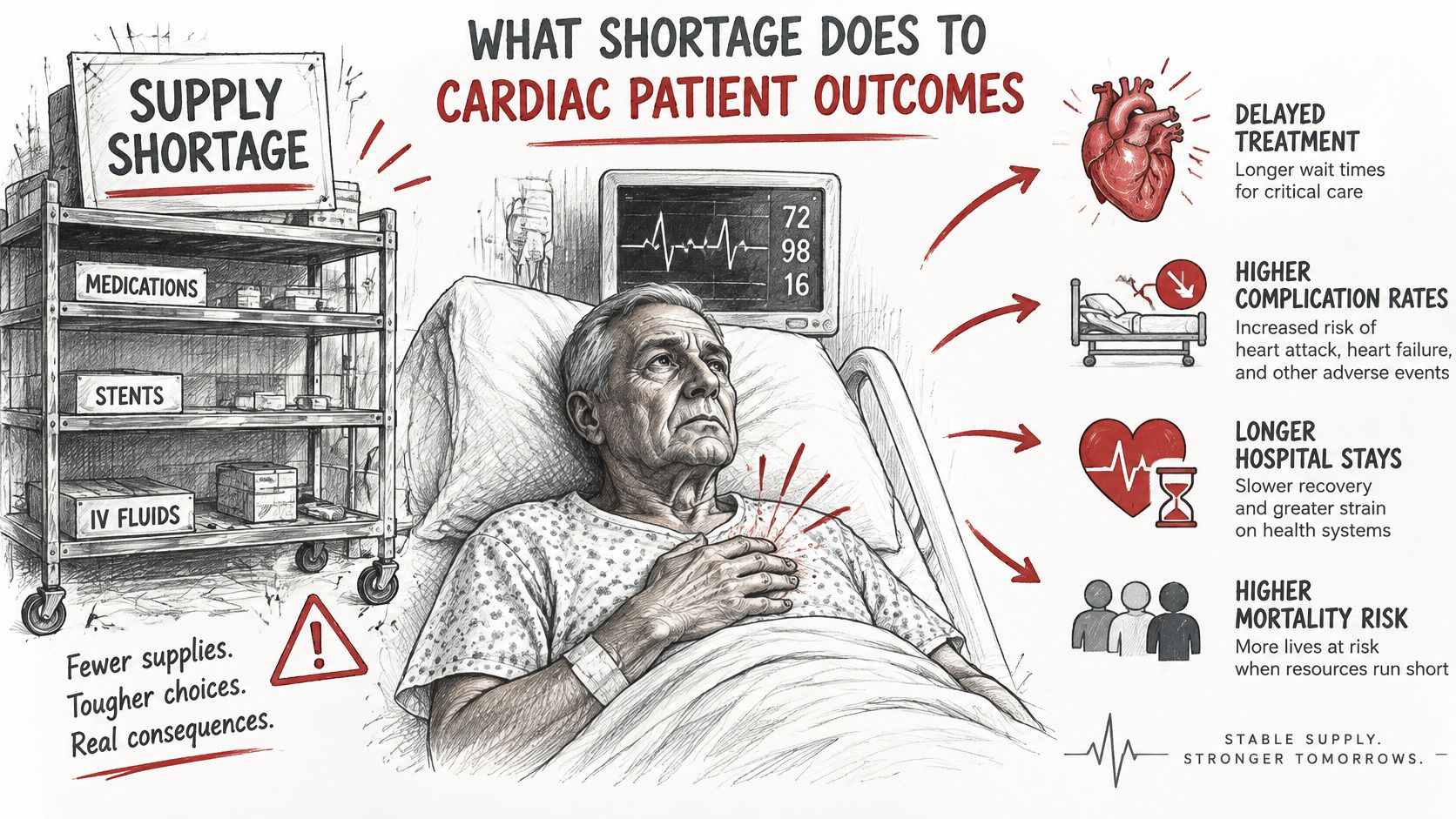
A 25-bed hospital sits 90 minutes from the nearest PCI center. One cardiologist covers clinic, inpatient consults, echocardiography oversight, and call. The county shows cardiology access on any workforce map. Coverage disappears during vacation, illness, or a single resignation, and every cardiac emergency depends on how well the transfer chain executes.
Time Becomes the First Clinical Variable
Primary PCI is commonly benchmarked at 90 minutes door-to-balloon, while transferred patients are measured against a 120-minute target. A 90-minute drive consumes nearly that entire margin before recognition, ECG transmission, acceptance, loading, weather, and lab readiness are even counted. A signed transfer agreement answers none of that. What matters is how often the full chain meets the target under real conditions.
The specialty context explains why the chain is fragile. The Association of American Medical Colleges rural health analysis reports urban areas had far more active cardiologists and anesthesiologists than rural areas in total in 2022, a gap of roughly 2.8 times on a per-resident basis for cardiology. It also reports more than 60% of Health Professional Shortage Areas for primary medical, dental, and mental-health services were rural in 2023, while specialty shortage areas aren't formally designated the same way. A county can post an acceptable physician ratio and still lack round-the-clock coverage, because a headcount says nothing about who responds at 3 a.m.
Continuity Slips Between Visits
Heart failure care requires repeated titration, diuretic adjustment, laboratory checks, and escalation when weight or symptoms change. Arrhythmia care requires rhythm follow-up, anticoagulation decisions, device checks, and timely electrophysiology referral. Monthly outreach can handle stable reviews, but it struggles with decompensation that emerges between clinic days.
Post-procedure care carries the same risk. A patient discharged after PCI elsewhere still needs antiplatelet adherence checks, bleeding review, rehabilitation referral, and lipid management locally. Each of those tasks is small. Each becomes a failure point when no local clinician owns it.
When those tasks lack a named owner, small misses accumulate into readmissions, emergency visits, or avoidable transfers.
Reliable access means a patient can reach the right clinician at the right stage, not simply that a specialist practices somewhere in the region.
Leakage Weakens the Service That Remains
Patients who travel for consultation often complete testing, procedures, and follow-up inside the receiving system. The rural hospital loses the case, downstream imaging, rehabilitation, and revenue that helps fund local coverage. Referring clinicians then see less reason to build local pathways, and volume falls further.
Low observed volume misleads staffing models. It can reflect distance, cost, late diagnosis, or patients bypassing local care, rather than low cardiovascular need. A service line that looks quiet may be one the region has already learned to route around.
Executives should track transfer times, unscheduled transfers, and referral leakage before concluding demand is insufficient. Judgement, those three measures reveal access failure earlier than vacancy counts do, and they expose the gap between a nominal ratio and coverage a patient is able to reach.
Policy Levers That Shape Rural Recruitment
Federal incentives can change candidate economics, but they do not create a cardiology program by themselves. The HRSA Texas fact sheet for fiscal year 2025 reports more than $594 million in new and continuing awards in Texas through programs including the National Health Service Corps, Nurse Corps, and STAR Loan Repayment Program. These are workforce tools rather than cardiology tools. They change what it costs a clinician to take a rural job; the case mix, call burden, and procedural backup that come with the job stay the same.
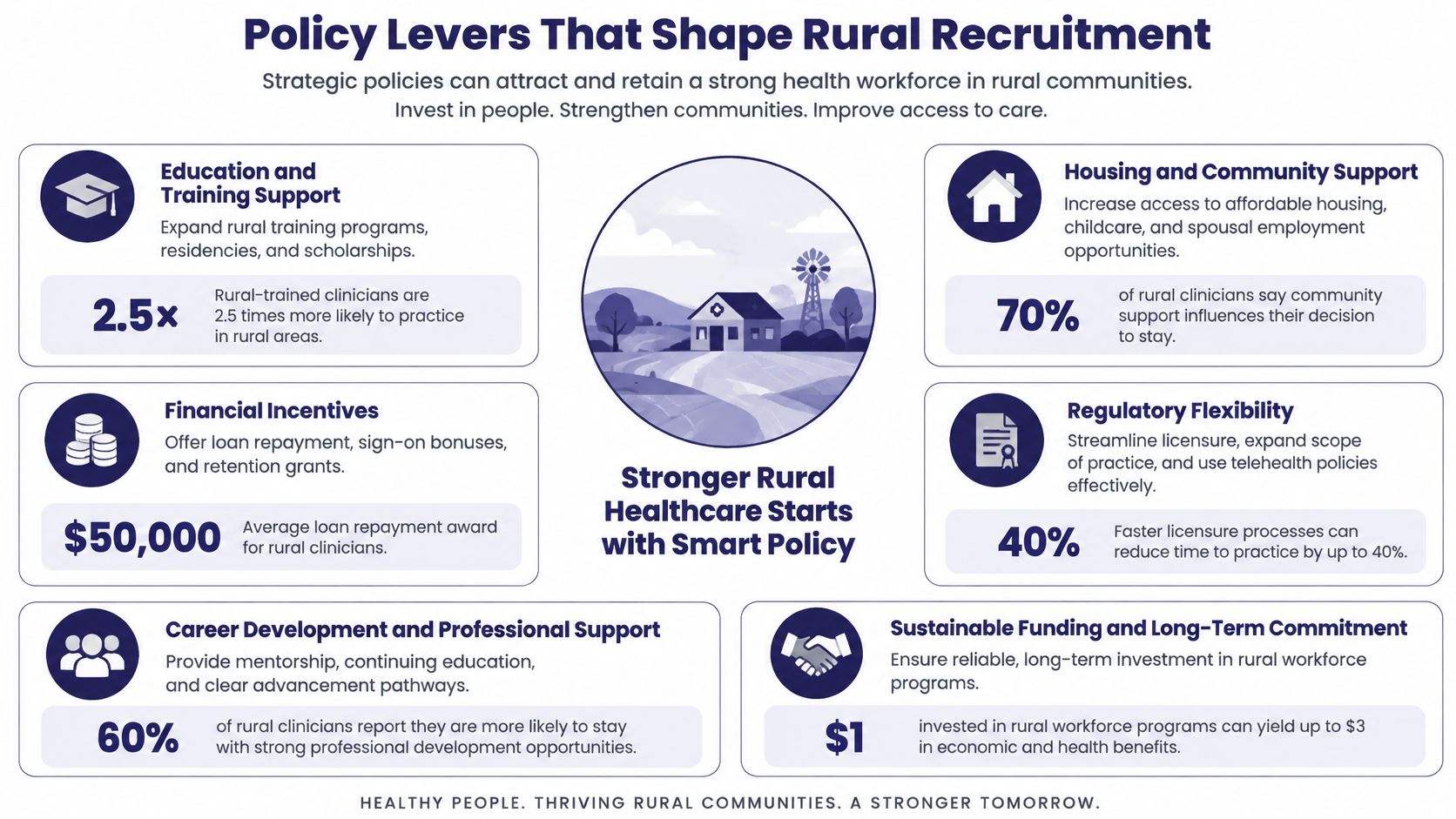
The mechanics are simple. Scholarships and loan repayment reduce educational debt in exchange for service commitments. Clinician and faculty programs widen the pipeline into shortage areas, including advanced practice roles that can support cardiology clinics. Most listed programs are not cardiology-specific, so eligibility must be verified candidate by candidate and site by site.
Scale Still Favors Early Action
HRSA projects a shortage of 70,610 full-time-equivalent primary care physicians by 2038, particularly acute in nonmetropolitan areas, in its State of the Primary Care Workforce 2025 report. A separate workforce projection in the AAMC physician shortage report estimates a total shortage of 54,100 to 139,000 physicians by 2033, including 33,700 to 86,700 non-primary-care specialists. Cardiology recruits from that constrained specialist pool, and cardiothoracic surgery draws on a surgical pool under similar pressure.
Latent demand widens the planning gap. The AAMC 2036 workforce modeling estimates the United States would have needed approximately 117,100 to 202,800 additional physicians as of 2021 if historically underserved populations used care at rates comparable to populations with better access. That range sits well above current shortfall estimates, which means current patient volume can understate need.
Practical diligence should cover four points before an offer depends on an incentive.
Site eligibility: Confirm the hospital or clinic qualifies under the relevant shortage designation.
Service obligation: Pin down commitment length, full-time definitions, and approved practice locations.
Exit terms: Clarify repayment or breach consequences if the physician leaves early.
Stacking rules: Test whether federal support can combine with state repayment, sign-on structure, or housing help.
Licensure decides how far a hire or a visiting specialist can reach. The Interstate Medical Licensure Compact overview is relevant when a hub cardiologist supports rural spokes across state lines. Judgement, incentive money should be budgeted as one component beside compensation, call design, procedural support, and professional development. A subsidy can fill a vacancy and still leave the county without overnight coverage.
Matching Coverage Models to Clinical Need
Bridge pathways protect coverage now. Build pathways create durable capacity. No single pathway wins across every rural market because the binding constraint differs, one hospital lacks emergency consultation, another lacks follow-up capacity, and another lacks enough procedural volume for a resident interventionalist.
Rural Cardiology Coverage Pathways by Speed, Cost and Limit
Pathway | Time to effect | Cost driver | Main limitation |
|---|---|---|---|
Retained physician search | Often several months to a year or more | Search fee, relocation, guaranteed income | Slow; needs local volume to retain the hire |
Locum tenens cardiology coverage | Days to a few weeks | Daily rate plus travel and lodging | Temporary; weak continuity of care |
Pipeline rotations and fellowship tracks | Three to seven years | Faculty time and rotation support | Slow; depends on rural exposure during training |
Telecardiology consultation | Weeks to deploy | Platform, broadband and nurse staffing | Cannot replace hands-on procedures |
Hub-and-spoke partnership | Months to set up transfer protocols | Transfer agreements and visiting-clinic schedules | Thin standardized outcome evidence |
APP-led clinic with specialist backup | About three to six months | APP salary, supervision and backup contract | Scope of practice and supervision limits |
Local incentive packages | Immediate effect on applicants | Call pay, sign-on bonus, housing | Improves retention but does not add supply |
Apply the Table to a Concrete Constraint
Return to the illustrative 25-bed critical access hospital, 90 minutes from a PCI center, with one cardiologist covering clinic and call. Say it averages roughly one STEMI transfer a month and carries a six-week heart failure waitlist. The dominant risks are different, STEMI care needs speed and acceptance certainty, while heart failure needs frequent titration and local follow-up.
A hub-and-spoke protocol should lead for the transfer problem. It can define ECG transmission, single-call acceptance, thrombolysis criteria where appropriate, transport triggers, and feedback on every case without waiting for a permanent hire. An APP-led heart failure clinic with cardiologist backup should lead for the waitlist, provided supervision, escalation thresholds, laboratory workflows, and medication authority are explicit.
Permanent recruitment becomes the lead model only when volume supports the role being recruited. A general cardiologist may thrive with clinic, inpatient consults, echocardiography, stress testing, and telehealth follow-up. An interventional cardiologist needs sufficient cath lab volume, trained staff, call partners, and surgical or transfer backup. Electrophysiology needs device volume, anesthesia support, and procedure space. Recruiting the wrong subspecialty profile creates an expensive mismatch.
Locums fit best as a bridge with a defined exit condition. They can preserve clinic access during a search, cover call relief, or test whether referral demand supports a permanent seat. The trade-off is continuity, patients may repeat histories, titration plans can reset, and local clinicians may hesitate to build referral habits around rotating physicians. Structured handoffs and longer assignments reduce that cost, and the locum tenens coverage guide outlines that coverage option.
Telecardiology works for triage, ECG review, inpatient consultation, heart failure check-ins, and post-discharge follow-up when broadband, staffing, and licensure hold up. It doesn't replace physical examination in unstable patients, bedside procedures, cath lab intervention, or device implantation. If broadband fails repeatedly, scheduled in-person outreach is more reliable than a video model that clinicians stop trusting.
Visiting clinics sit between telehealth and permanent placement. A weekly or twice-monthly cardiologist can clear consultations, supervise testing, review APP panels, and identify patients who need hub procedures. The limitation appears between visits, urgent questions still need a named backup route, and procedural candidates still travel.
Decision rule: Match the lead model to the dominant constraint first, then layer secondary models around it.
Evidence for choosing among these models remains incomplete. The New York State Comptroller release on rural health professional shortages reports 16 rural New York counties averaged 4.0 primary-care physicians per 10,000 residents in 2025, versus 8.4 nationally, and nearly 173,000 residents lived in designated primary-care shortage areas. Rural leaders combine visiting specialists, referrals, telehealth, and specialist-supported primary care, but standardized comparisons of cost, outcomes, retention, and equity across models don't yet exist.
That evidence gap changes governance, not urgency. Each pathway needs a review date, owner, and stop rule. A locum bridge should specify the permanent search milestone that ends it. A telecardiology pilot should track consult turnaround, avoided transfers, broadband failures, and clinician adoption. An APP clinic should track wait times, titration completion, escalations, and patient retention locally.
Judgement, the strongest rural design is usually a portfolio. Hub-and-spoke protocols protect time-sensitive care, APP capacity protects continuity, visiting or virtual specialists protect access, and permanent recruitment proceeds where volume and call structure can retain the hire. Hospitals that choose only one lever inherit its limitation at full strength.
Build a Lasting Cardiology Coverage Plan
A workable plan can start within one quarter, provided each step produces a decision rather than another vacancy report.
Map current coverage: Document cardiology coverage hours, transfer times, and unscheduled transfers over the last 12 months.
Quantify demand and strain: Measure procedural volume, call burden per physician, waitlists, and cases leaving the hospital.
Choose one bridge: Select locum tenens, telecardiology, or visiting clinics to protect the next six months.
Choose one build pathway: Commit to retained search, an APP-led team, or a hub-and-spoke agreement with a seat-filling deadline.
Stack incentives carefully: Confirm eligible federal and state programs, service obligations, and exit terms before an offer is made.
Evaluate partners on fit: Score specialty depth, cultural alignment, candidate preparation, and retention record, not submission volume alone.
American Cardiology Group is a recruitment partner dedicated to cardiology and cardiac surgery, offering permanent physician search, locum tenens coverage, and APP placement for rural and community hospitals. Its process emphasizes cultural alignment, which matters when one placement may carry clinic, call, and program credibility simultaneously.
Quarterly review should track time-to-fill, 12-month retention, transfer times, and referral leakage. Those measures show whether coverage is becoming reliable or merely staffed on paper. Judgement, lasting rural cardiology access comes from aligning clinical need, sustainable call, and retention design before the next resignation forces the issue.
American Cardiology Group supports rural and community hospitals with permanent cardiology and cardiac surgery search, locum tenens coverage, and APP placement designed around long-term fit. Hospitals working through the rural physician shortage can discuss coverage design, hard-to-fill subspecialty roles, and retention-focused recruitment by visiting American Cardiology Group.
Comments