
Best Locum Tenens Companies: Cardiology Guide for 2026
A rural hospital's only interventional cardiologist is on leave. STEMI transfers keep arriving, the cath lab schedule remains open, and the replacement physician is still waiting on state licensure. The staffing agreement is signed, but the hospital still doesn't have usable coverage.
That's why choosing among the best locum tenens companies is a clinical continuity decision as much as a procurement exercise. A recruiter's candidate list matters less than whether the physician can obtain the required privileges, manage the actual call burden, and work safely within the hospital's procedural and surgical capabilities.
Temporary staffing is already embedded in hospital operations. In a 2022 survey, 88% of healthcare facilities reported using locum tenens physicians or other temporary providers during the preceding year, according to the AMN Healthcare locum tenens survey.
The seven firms below offer different combinations of specialty focus, national reach, administrative support, and recruitment services. Hospital leaders can compare them against five criteria: clinical fit, credentialing readiness, geographic reliability, financial transparency, and assignment continuity. The right balance changes by setting. A critical-access hospital needs dependable arrival and realistic escalation arrangements; an academic center may prioritize complex electrophysiology privileges, procedural scope, and integration with fellows.
Table of Contents
1. American Cardiology Group - Where the specialty model fits
3. Weatherby Healthcare - Separate support from clinical readiness
How the Leading Locum Tenens Firms Compare for Cardiology Coverage
Building a Cardiology Locum Partnership Before the Next Coverage Gap - Use a repeatable scoring method - Require evidence before commitment
1. American Cardiology Group
Best suited to cardiac programs seeking specialty-focused locum coverage alongside a longer-term recruitment plan.
American Cardiology Group specializes exclusively in cardiology and cardiac surgery across the United States. Its services include permanent physician recruitment, locum tenens coverage, NP and PA recruitment, and executive search, supporting organizations from rural hospitals and private practices to academic medical centers.
That focus is useful when a vacancy can't be described adequately as cardiology coverage. An electrophysiology service may need device management and inpatient consultation without ablation coverage. A cardiothoracic surgery assignment may require a specific operative scope, postoperative management responsibilities, and clearly defined backup arrangements.
ACG's network spans general cardiology, subspecialties, interventional cardiology, and surgical roles. Each locum professional is vetted before placement, and dedicated recruiters provide personalized support to the facility and clinician throughout the process. The team also manages credentialing and compliance, although hospital leaders should still distinguish agency preparation from medical staff approval and state licensing decisions.
Where the specialty model fits
Consider a community hospital losing an interventional cardiologist while its permanent search remains open. A useful engagement would define cath lab responsibilities, STEMI call, inpatient rounding, outpatient expectations, and the availability of surgical transfer support before candidate presentation.
ACG customizes engagements around the organization's needs, values, and goals. Its combination of temporary and permanent recruitment allows the hospital to address immediate coverage without treating the eventual permanent appointment as an unrelated problem.
Strengths: Exclusive cardiac recruitment, nationwide reach, vetted candidates, and services extending across physicians, advanced practice clinicians, and leadership.
Evidence to interpret carefully: Website testimonials describe successful engagements in academic, private-practice, rural, and multisite settings. They support consideration, but aren't comparative measures of fill speed or clinical outcomes.
Trade-offs: Pricing and fee structures aren't published. The specialty focus is less suitable for an organization seeking a single recruiter across unrelated clinical departments.
A Tennessee health-system CEO describes critical cardiology placements across several facilities, while a Montana clinical leader highlights specialists willing to work in a rural setting. Those experiences are relevant to service-line fit, but a hospital still needs an assignment-specific scope and written commercial terms.
Selection judgment: A strong shortlist candidate when cardiac screening depth and a durable workforce plan matter more than multispecialty breadth. No awards or certifications are identified in the available company materials.
2. CompHealth
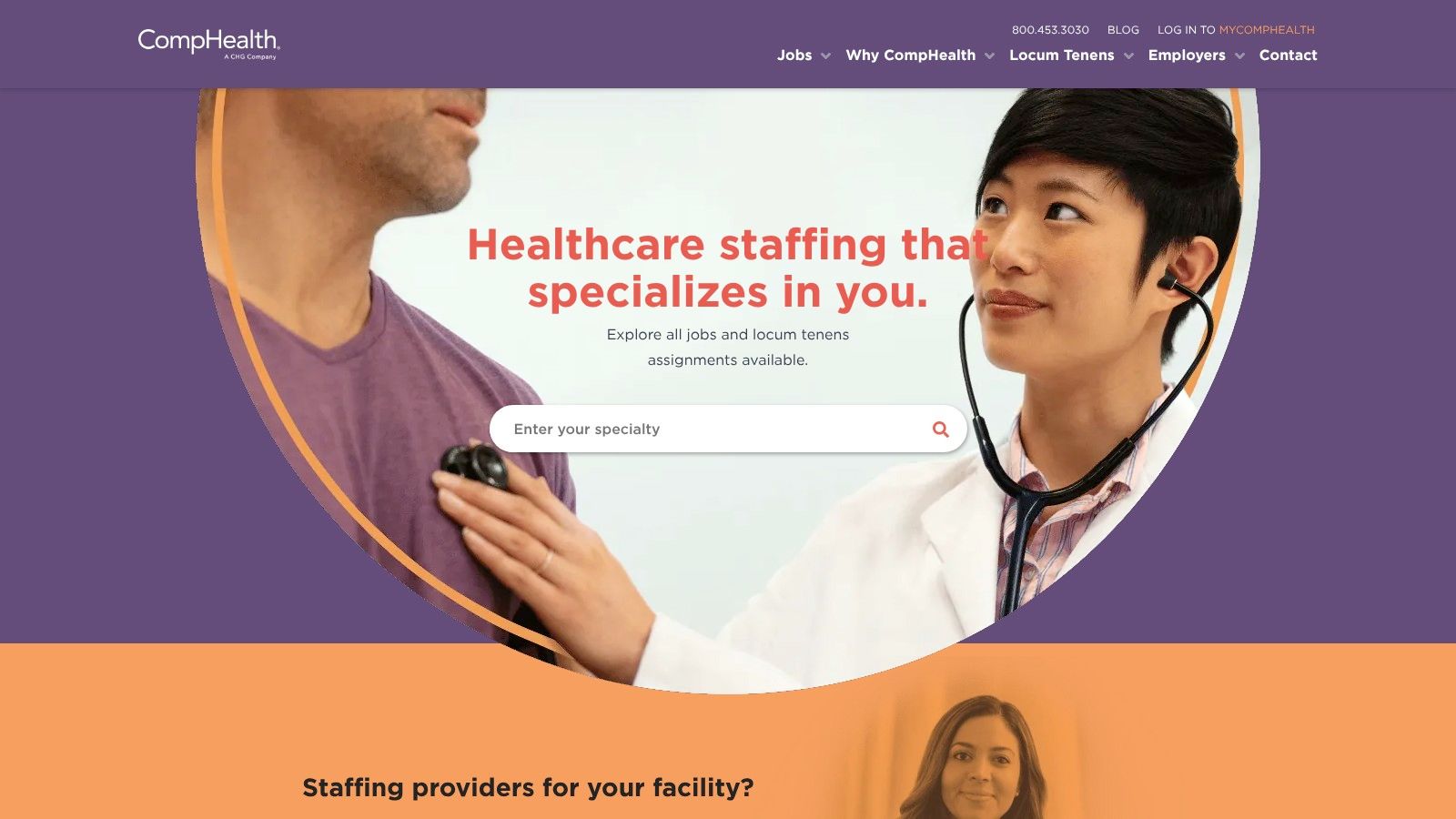
CompHealth fits organizations that need national sourcing and substantial assignment support rather than a cardiology-only recruitment model.
CompHealth offers locum tenens and permanent physician recruitment. Its cardiology opportunities include inpatient and outpatient work, call coverage, and procedural assignments, with short-term, recurring, and ongoing arrangements.
For a health system covering several community hospitals, that breadth can be useful. The important distinction is between a national inventory of opportunities and an available physician who matches the specific facility's privileges, dates, and clinical workload.
Travel, housing, malpractice coverage, and credentialing support are part of its offering. These services can reduce administrative coordination, but they don't remove the hospital's responsibility to establish onboarding requirements and approve privileges.
Test the actual coverage model
Consider an interventional cardiology vacancy involving daytime cath lab work and overnight call. The hospital should separate scheduled procedures, emergency activation, rounding, and post-call responsibilities rather than accept an undifferentiated coverage description.
What works: Listings may identify schedules and clinical requirements, helping the medical director reject unsuitable assignments before interviews.
What needs scrutiny: Compensation and facility fees aren't generally published as standard pricing. Recruiter responsiveness and available candidates can vary by location and specialty.
What distinguishes a usable proposal: A named clinician, confirmed availability, documented procedural scope, and an administrative plan tied to the requested start.
Practical rule: A large candidate pool isn't the same as a ready-to-start interventional cardiologist.
CompHealth's permanent recruitment capability also suits hospitals considering a temporary bridge during an open search. However, conversion terms and responsibility for ongoing recruitment should be documented separately from the coverage agreement.
Selection judgment: A practical option for broad national sourcing and logistics support, provided the hospital evaluates the proposed cardiac clinician rather than the size of the wider staffing network.
3. Weatherby Healthcare
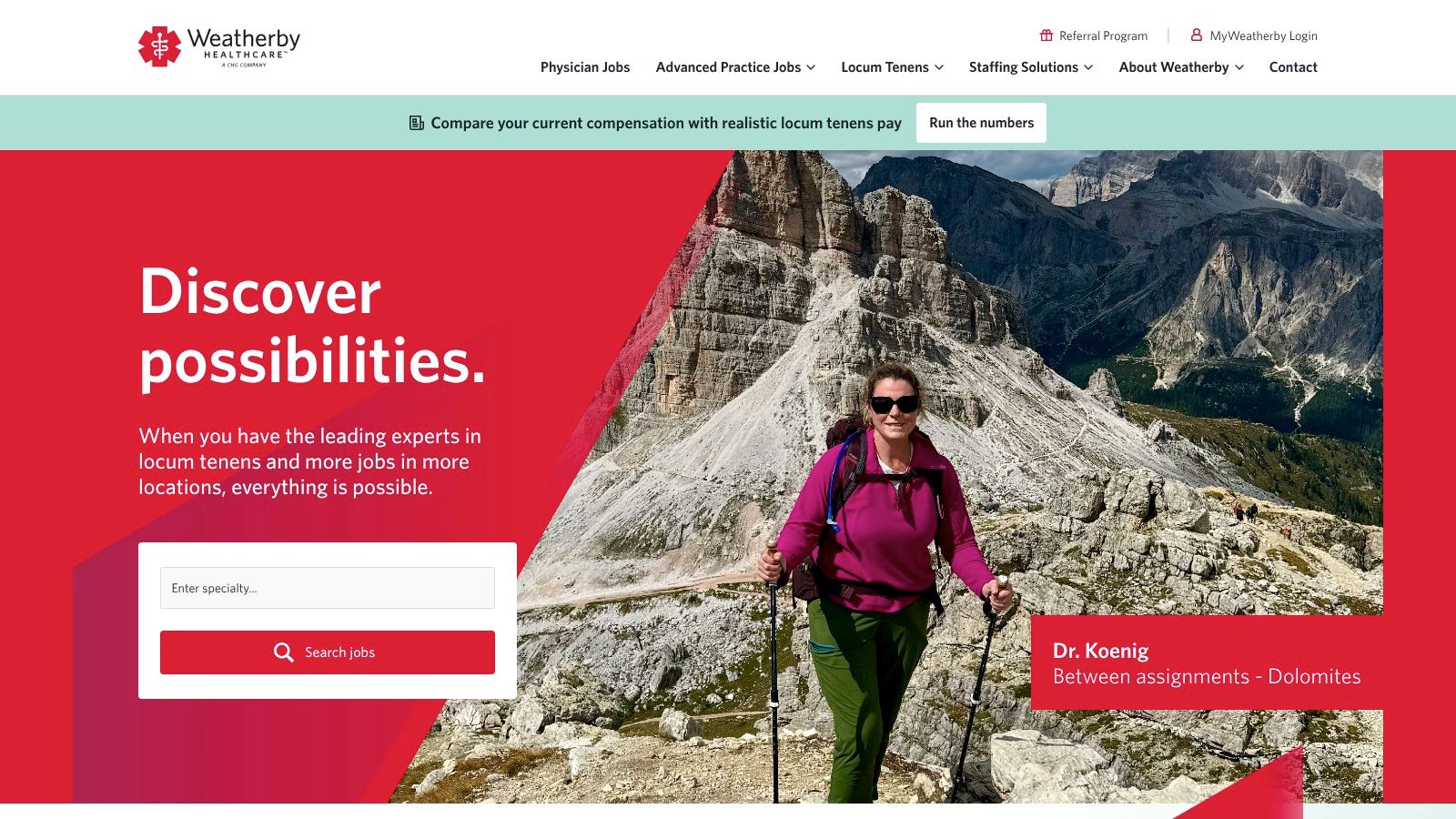
An electrophysiology absence can leave several different gaps: inpatient consultation, device interrogation, implantation, and ablation. Weatherby Healthcare deserves consideration when those responsibilities can be translated into a precise, recurring assignment.
Weatherby Healthcare, part of CHG Healthcare, places physicians and advanced practice clinicians in locum roles. Its dedicated cardiology listings include general and interventional cardiology, inpatient and outpatient care, and call assignments.
The company describes specialty-specific consultant support, malpractice coverage, travel and housing arrangements, and online tools for assignment details and time entry. Public listings can include shifts, procedures, and patient volume, although not every available role appears online.
Separate support from clinical readiness
For an academic electrophysiology service, the deciding issue may be whether a candidate's recent experience matches the requested procedures and available equipment. Neither a recruiter's specialty label nor a completed travel itinerary establishes that fit.
A hospital can use the same distinction when reviewing locum tenens rules and assignment requirements: licensing, hospital privileges, contractual scope, and coverage arrangements require separate confirmation.
Advantages: Specialty-specific consultant support and detailed listings can help clarify procedural and call expectations early.
Limitations: Availability varies by state and subspecialty, and the firm doesn't publish a standard rate card.
Contract priority: Travel, housing, malpractice provisions, and assignment benefits should be confirmed for the specific engagement.
For a multisite system, the proposal should also identify which facilities require separate onboarding and privileges. A clinician approved at the flagship hospital shouldn't be assumed ready for every satellite location.
Selection judgment: A reasonable option for organized, repeatable coverage with consultant and logistics support. The hospital should reject any proposal that treats general cardiology availability as a substitute for verified electrophysiology or interventional capability.
4. AMN Healthcare
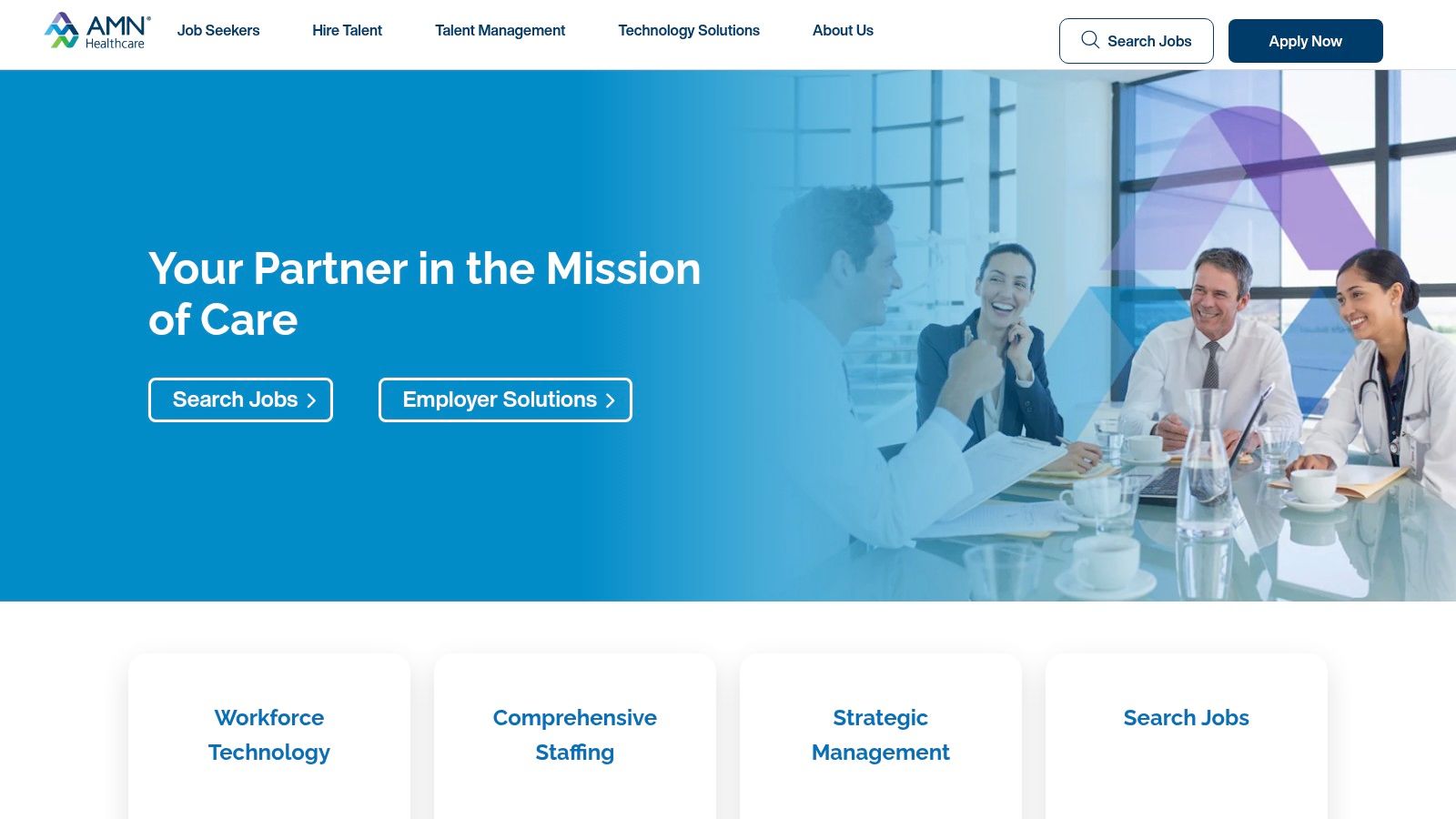
AMN Healthcare is worth evaluating when the staffing problem extends beyond an attending physician vacancy. An advanced heart failure program, for example, may need physician coverage alongside cardiology NP or PA support.
AMN Healthcare lists general, non-invasive, invasive, interventional, and advanced heart failure opportunities, as well as cardiology advanced practice roles. It provides recruiter assistance and support with credentialing, licensing, travel, lodging, and malpractice arrangements.
AMN Passport adds job-search and assignment-management functionality. That can help clinicians manage opportunities and assignment information, but the hospital still needs a direct operational contact responsible for unresolved onboarding tasks.
Compare the team configuration
Consider a heart failure service with an attending absence and inadequate follow-up capacity. A cardiologist-only assignment might restore inpatient consultation while leaving discharge follow-up and clinic access unresolved.
The better comparison is between proposed staffing configurations, including physician responsibilities, NP and PA scope, supervision arrangements, and handoffs. A broader review of healthcare staffing agencies is useful when those needs cross clinician categories.
Breadth: Multiple cardiology subspecialties, advanced practice opportunities, and locum and permanent pathways.
Transparency: Public listings sometimes include pay estimates and assignment requirements, but estimates aren't guaranteed final compensation.
Execution risk: The experience can depend on the assigned recruiter and team. State licensure and credentialing requirements can still prevent the proposed start.
A recruitment app can organize an assignment. It can't approve privileges or resolve an undefined clinical scope.
For an academic center, evaluation should include teaching expectations, multidisciplinary rounds, and the boundary between general heart failure management and specialized program responsibilities. Hospitals shouldn't infer competence across that entire scope from a broad specialty heading.
Selection judgment: A useful candidate for systems coordinating physician and advanced practice staffing, with close attention to team ownership, final pricing, and documented readiness.
5. Jackson and Coker
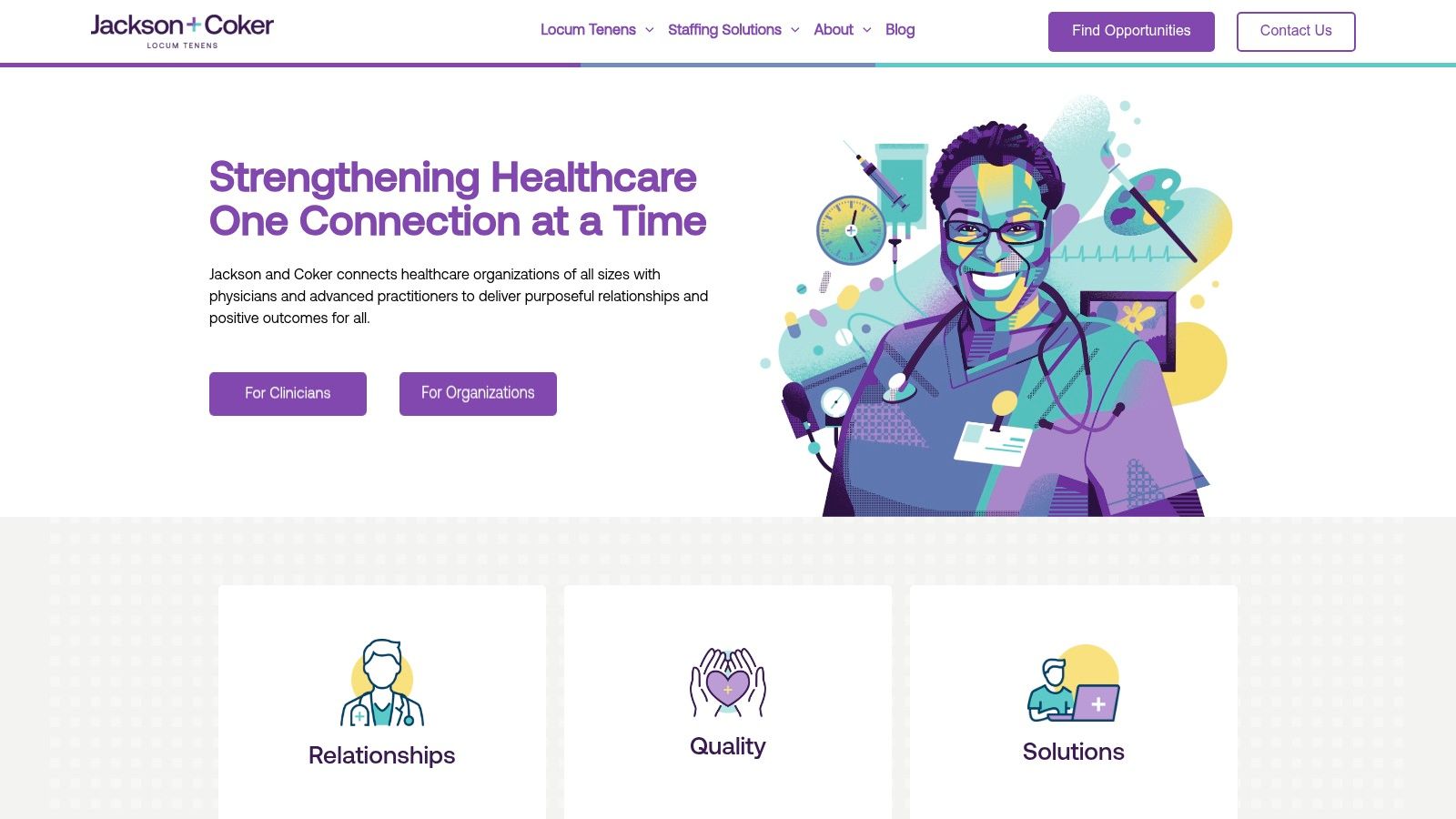
A cardiothoracic surgeon doesn't restore surgical capacity alone. Cardiac anesthesiology, ICU staffing, perfusion, operating room availability, and postoperative coverage all affect whether a hospital can accept cases.
Jackson and Coker offers nationwide locum placements for physicians and advanced practitioners, alongside permanent recruitment. Its listings have included general and non-invasive cardiology, cardiology NP and PA roles, cardiac anesthesiology, and cardiothoracic surgery-related opportunities.
That cardiovascular breadth makes the firm relevant when a hospital has several connected vacancies. It doesn't establish that every required clinician is available in the same region or for matching dates.
Evaluate the operative pathway
Consider a hospital arranging cardiothoracic surgical leave coverage. The clinical director should define the permitted operative scope, emergency reoperation responsibilities, postoperative rounds, and the backup surgeon before comparing candidates.
The firm describes credentialing and privileging assistance, travel and lodging coordination, and assignment communication. Those services are valuable only when the hospital and recruiter agree on who owns each outstanding task.
Useful features: Live openings and consultant communication provide a starting point for assessing current availability.
Main trade-off: Subspecialty and regional availability vary, and some assignment details require recruiter follow-up.
Commercial limitation: Client pricing isn't presented as a standard public fee schedule.
The hospital should evaluate the proposed surgeon against its actual case mix and support structure, rather than request cardiothoracic coverage alone. A clinician suited to one operative environment may not fit another facility's postoperative resources or emergency expectations.
Communication should continue after arrival. A named escalation contact, a clear process for schedule changes, and explicit responsibility for replacement coverage matter more than general assurances of support.
Selection judgment: Particularly relevant to hospitals exploring related cardiovascular staffing needs, provided each component of the surgical service has its own confirmed coverage plan.
6. LocumTenens.com
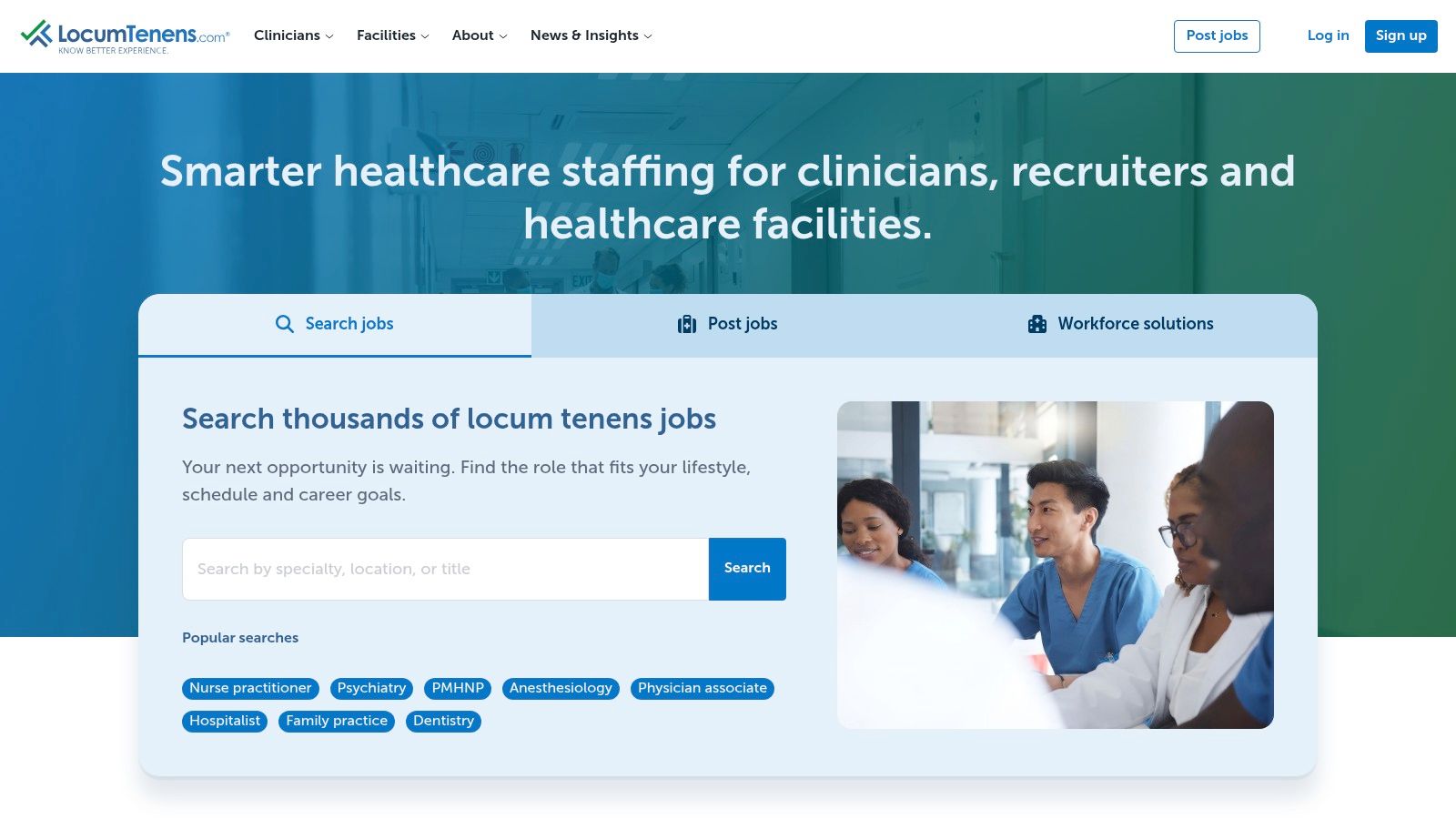
LocumTenens.com offers a choice between recruiting assistance and a more self-directed search. That distinction matters for hospitals with different internal recruitment resources.
LocumTenens.com operates as a full-service healthcare staffing company and job platform for physicians and advanced practitioners. Cardiology is among its supported specialties, and facilities can use recruiting services alongside an online job-posting option.
The company also provides online and mobile assignment tools. It reports 2026 ClearlyRated Best of Staffing recognition for clients and talent on its website, which is company-reported service recognition rather than a comparison of cardiology coverage outcomes.
Match the service to internal capacity
A private cardiology practice needing recurring outpatient coverage may have staff capable of handling candidate screening and onboarding. A rural hospital facing an urgent call gap may need active sourcing and close administrative coordination instead.
Those are different purchasing decisions. A job posting can attract interest, but it doesn't guarantee a qualified candidate, accepted dates, or a completed credentialing file.
Recruiting service: Better aligned with organizations needing sourcing and assignment coordination, subject to confirmation of the relevant cardiology team's capacity.
Self-service platform: Potentially useful when the facility has recruitment staff and enough preparation time to manage responses.
Pricing: Compensation and facility bill rates aren't generally published as fixed prices.
For a general cardiology assignment, the hospital should specify whether coverage includes echocardiography interpretation, inpatient consultation, stress testing, or call. Broad specialty matching won't resolve an ambiguous job description.
Procurement distinction: Platform access and a confirmed clinical assignment are different deliverables.
Service awards can inform an initial shortlist, but the final decision should rest on the proposed clinician, administrative readiness, contract terms, and replacement arrangements.
Selection judgment: A flexible option for multispecialty organizations and facilities with established recruitment operations. Hospitals with urgent cardiac gaps should confirm that they're buying active recruitment support, not merely exposure to potential applicants.
7. Barton Associates
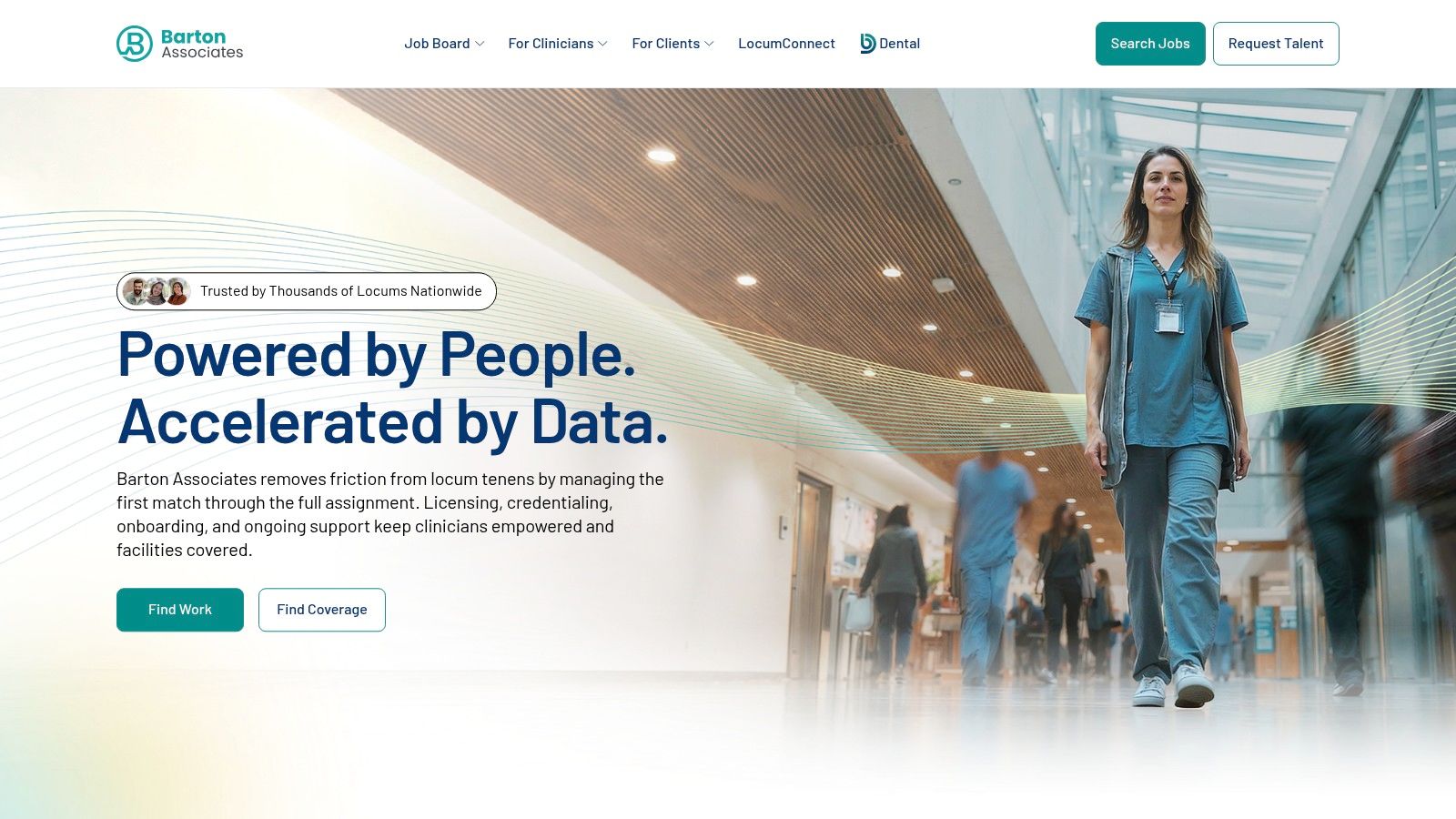
Barton Associates merits consideration when the same organization needs several clinician types across different cardiac settings.
Barton Associates maintains dedicated cardiology locums information and describes placements for physicians, NPs, PAs, and CRNAs across cardiology and related areas. Its stated coverage includes general, pediatric, invasive, and interventional cardiology, with settings ranging from private practices and cath labs to university and critical-access hospitals.
Assignment descriptions may include duration, schedule, requirements, and clinical duties. Those details help hospitals screen for relevance, but stated specialty breadth shouldn't be mistaken for confirmed local availability.
Give rural reliability more weight
Consider a critical-access hospital seeking general cardiology consultation and outpatient support, with procedural referrals directed elsewhere. The best candidate may be a clinician comfortable with that service model rather than someone seeking a predominantly procedural assignment.
The location also changes the evaluation. Travel routing, weather disruption, lodging, arrival expectations, and the availability of return coverage deserve explicit attention.
Strength: Specialty-focused descriptions and multiple clinician categories can help organizations identify options for connected vacancies.
Limitation: Scale and specialty breadth are self-reported, and openings change. Current candidate availability needs assignment-specific confirmation.
Contract detail: Travel, licensing, malpractice, and credentialing support should be established in writing rather than inferred from general service descriptions.
Hospitals comparing physician placement agencies should distinguish recruitment reach from demonstrated willingness to accept the particular location and call pattern.
For a cardiovascular ASC, the equivalent test centers on procedural scope, facility privileges, anesthesia arrangements, and transfer protocols. A candidate's experience in a university hospital doesn't automatically establish suitability for an outpatient procedural environment.
Selection judgment: A candidate for organizations seeking varied clinician types and settings, with geography and assignment-specific administrative support treated as deciding factors rather than secondary logistics.
How the Leading Locum Tenens Firms Compare for Cardiology Coverage
Compare firms against the coverage gap, not just the specialty label. Electrophysiology call, interventional procedural volume, and cardiothoracic surgical coverage each require a different match. The table summarizes the stated scope and support; confirm assignment-specific terms directly with each firm.
Firm | Cardiology Scope | Credentialing Support | Pay Transparency | Best Fit |
|---|---|---|---|---|
American Cardiology Group | Exclusive focus across general cardiology, subspecialties, and cardiac surgery | Manages credentialing and compliance for locum providers | Pricing not published | Organizations seeking permanent, locum, advanced-practice, or executive cardiac recruitment |
CompHealth | Cardiology locums across inpatient, outpatient, call, and procedural work | Credentialing and privileging support | Compensation and fees generally not published | Organizations seeking national reach and locum support |
Weatherby Healthcare | General and interventional cardiology locums | Assignment support; confirm contract details | No standard public rate card | Hospitals needing multi-location cardiology coverage |
AMN Healthcare | Multiple cardiology subspecialties, including NP and PA roles | Credentialing and licensing assistance | Some listings show estimated pay; not guaranteed | Organizations seeking broad locum or permanent options |
Jackson and Coker | Cardiology and related cardiovascular roles | Credentialing and privileging support | Pricing and client fees not publicly standardized | Facilities needing locum or permanent recruitment across roles |
LocumTenens.com | Cardiology among many supported specialties | Assignment management tools; specific support not detailed | Compensation and bill rates generally not published | Multi-specialty systems seeking recruiting services or a job platform |
Barton Associates | Cardiology and related roles for physicians and advanced practitioners | Confirm support for each assignment | Pay may not appear in public listings | Organizations seeking cardiology locums across varied settings |
Treat the table as a shortlist, not a substitute for assignment review. For an electrophysiology gap, confirm the candidate's fit for the call responsibilities. For interventional coverage, assess whether the expected procedural work matches the assignment. For cardiothoracic surgery, verify the role's scope and coverage expectations.
American Cardiology Group provides locum tenens staffing across cardiac specialties and manages credentialing and compliance for locum providers. Its dedicated recruiters support both facilities and providers through the process. Pay terms should still be confirmed for each assignment, since the table does not provide a public rate.
Building a Cardiology Locum Partnership Before the Next Coverage Gap
The best locum tenens companies aren't interchangeable. A firm suited to recurring outpatient cardiology may not be the right partner for urgent electrophysiology call or cardiothoracic surgical coverage.
The workforce outlook makes advance planning important. The Association of American Medical Colleges projects a U.S. physician shortage of between 13,500 and 86,000 by 2036, supporting the case for flexible coverage while permanent recruitment proceeds.
Use a repeatable scoring method
Hospital leaders should first map gaps by subspecialty, procedural scope, call burden, site, and anticipated duration. Each shortlisted firm should then receive an evidence-based rating of strong, conditional, or unacceptable against the same criteria.
Clinical fit: Recent experience matches the requested procedures, consultation responsibilities, and institutional resources.
Credentialing readiness: The candidate's license status, file completeness, privilege requirements, and outstanding dependencies are documented.
Geographic reliability: Travel arrangements and willingness to return support the actual schedule and location.
Financial transparency: Base charges, call, overtime, travel, malpractice, cancellation, and conversion terms are explicit.
Assignment continuity: The firm identifies an operational owner, replacement process, and approach to recurring coverage.
These are proposed evaluation categories, not vendor performance claims. A favorable overall impression shouldn't override an unacceptable result on clinical scope or the ability to start legally and appropriately.
For a rural hospital, geographic reliability and sustainable call participation may deserve greater weight. For an academic electrophysiology program, procedural fit, complex privileges, teaching expectations, and laboratory integration may decide the outcome.
Require evidence before commitment
Before an assignment is signed, the hospital should obtain a written licensure and privileging timeline, with named owners and unresolved dependencies. The requested start date shouldn't become a contractual assumption because a candidate has accepted it.
Financial evaluation should also extend beyond the hourly invoice. The CHG Healthcare State of Locum Tenens report discusses evidence challenging blanket assumptions about locum cost and quality, but that doesn't establish that every assignment creates value.
Hospitals should track filled shifts, cancellations, credentialing defects, procedural access, and assignment completion against the original coverage need. American Cardiology Group's cardiology-only focus can support deeper specialty screening, while generalist firms may better fit systems purchasing across unrelated specialties.
The sound decision is the firm-clinician combination that restores the required service under clear clinical, operational, and financial terms.
American Cardiology Group offers cardiac-focused locum tenens coverage, permanent recruitment, advanced practice placement, and executive recruitment across the United States. Hospital leaders can visit American Cardiology Group and submit a staffing request describing the subspecialty, coverage dates, call responsibilities, and procedural requirements so its recruiters can develop a recruitment approach.
Comments